
The Women Who Built the Loire: Beyond Chenonceau
The women who built the Loire are usually remembered as a single story: two rivals in black and white, a river château called Chenonceau, and a queen who took her revenge the moment her husband died. That drama is real, and it is told in full in our history of the ladies of the Loire, the six women who built, won, and saved Chenonceau across four centuries. What follows looks outward from that one bridge over the Cher to the rest of the valley, where a favourite, a duchess, a regent, a financier’s wife, and a queen mother each left a château marked by her name, her money, or her will.
Their Loire is not a chain of royal hunting lodges that happen to be beautiful. It is a landscape of female power that the kings’ chronicles tend to file under other men’s reigns. A mistress lies in effigy at Loches because a king could not bear to bury her anywhere ordinary. A duchess married the crown of France twice over, at a castle chosen for the purpose. A regent governed a kingdom from Amboise while her son fought in Italy, then governed it again when he was captured. Reading the valley through these five lives changes what the châteaux are for.
Agnès Sorel: The King’s Favourite at Loches
Agnès Sorel arrived in the story of France around 1422, and left it, spectacularly, in 1450. She was the first woman a French king openly acknowledged as his mistress, a rank with no precedent and, at the time, no polite name. Charles VII gave her the château of Beauté-sur-Marne near Vincennes, and with it a title that doubled as a compliment: the Dame de Beauté, the Lady of Beauty. Court poets and hostile clerics agreed on little except that she had changed the king. She wore diamonds that had been a merchant’s, not a queen’s; she set fashions the church deplored; and she held, for a few years, more of Charles VII’s attention than his wars.
Loches was one of her favourite residences. Charles VII kept his lodge in the royal city on the rock above the Indre while Queen Marie d’Anjou held court at Chinon, and the arrangement suited a king who wanted his mistress near. When Agnès died on 9 February 1450 at the manor of Le Mesnil-sous-Jumièges, far to the north, her body was carried back to Loches and buried in the collegiate church of Saint-Ours. She was in her late twenties, and had just delivered her fourth child.
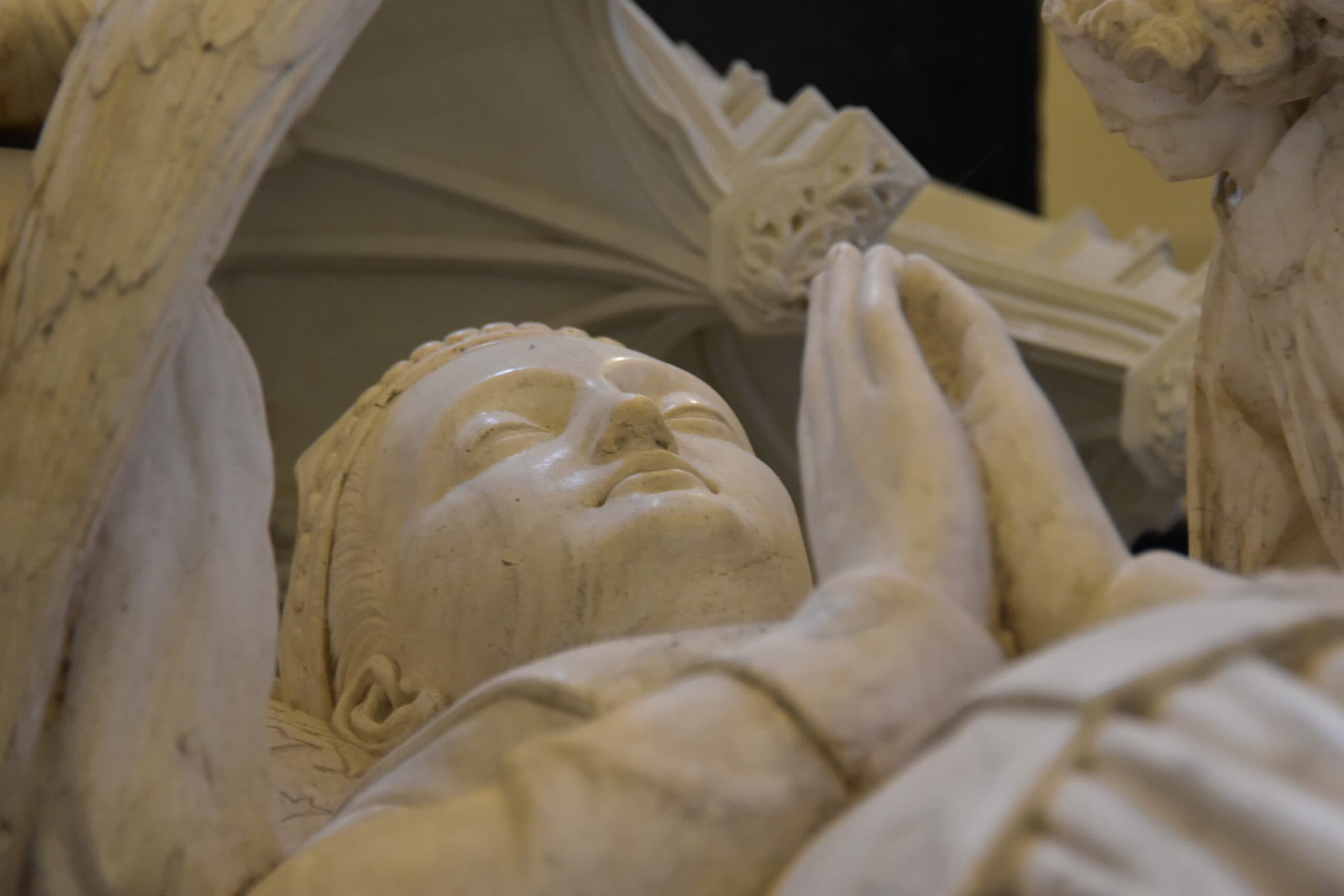
Her tomb is the reason Loches keeps her. The recumbent effigy, carved in pale alabaster on a slab of black marble, shows her with two lambs at her feet and two angels at her head, hands folded in a stillness the living woman was never accused of. Heritage records date the work to the fifteenth century and name no sculptor; the attribution has been argued over for two hundred years without resolution, and this account leaves it where the record leaves it. The tomb has not had an easy afterlife. Revolutionaries who took the recumbent figure for a saint mutilated it; a nineteenth-century restorer named Beauvallet repaired the damage; the monument was shuffled between a castle tower and the church more than once before returning to the nave of Saint-Ours in 2004, its occupant’s remains reinstalled the following spring.
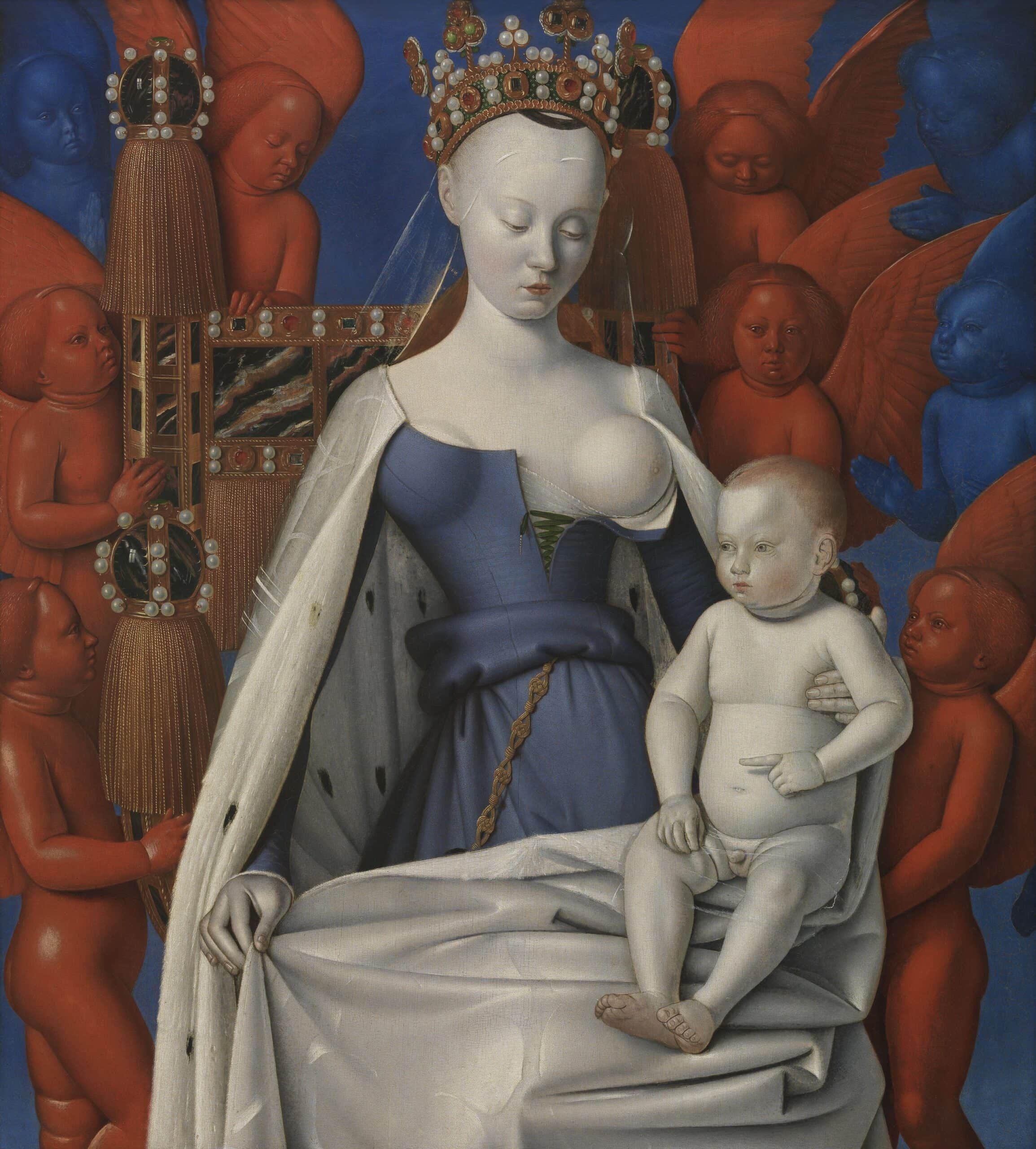
Those remains had a story of their own to tell. When a forensic team examined them in 2005, it found a level of mercury high enough to raise the possibility that Agnès Sorel was poisoned in the last days of her life, though a medical accident or a cosmetic dose could not be ruled out. What is certain is her face. The Antwerp panel of Jean Fouquet’s Melun Diptych, a serene Madonna surrounded by red and blue angels, is held by its museum to be modelled on Agnès, and the resemblance to her tomb portrait at Loches is close enough that the tradition is probably true. Fouquet painted the panel for Étienne Chevalier, the royal treasurer who kneels in prayer on the diptych’s other half, now in Berlin, so that the two wings have hung in different countries for generations. A king’s mistress became the most famous Virgin in French painting, and both versions of her wait a day’s drive apart.
Anne of Brittany: The Duchess Who Married France
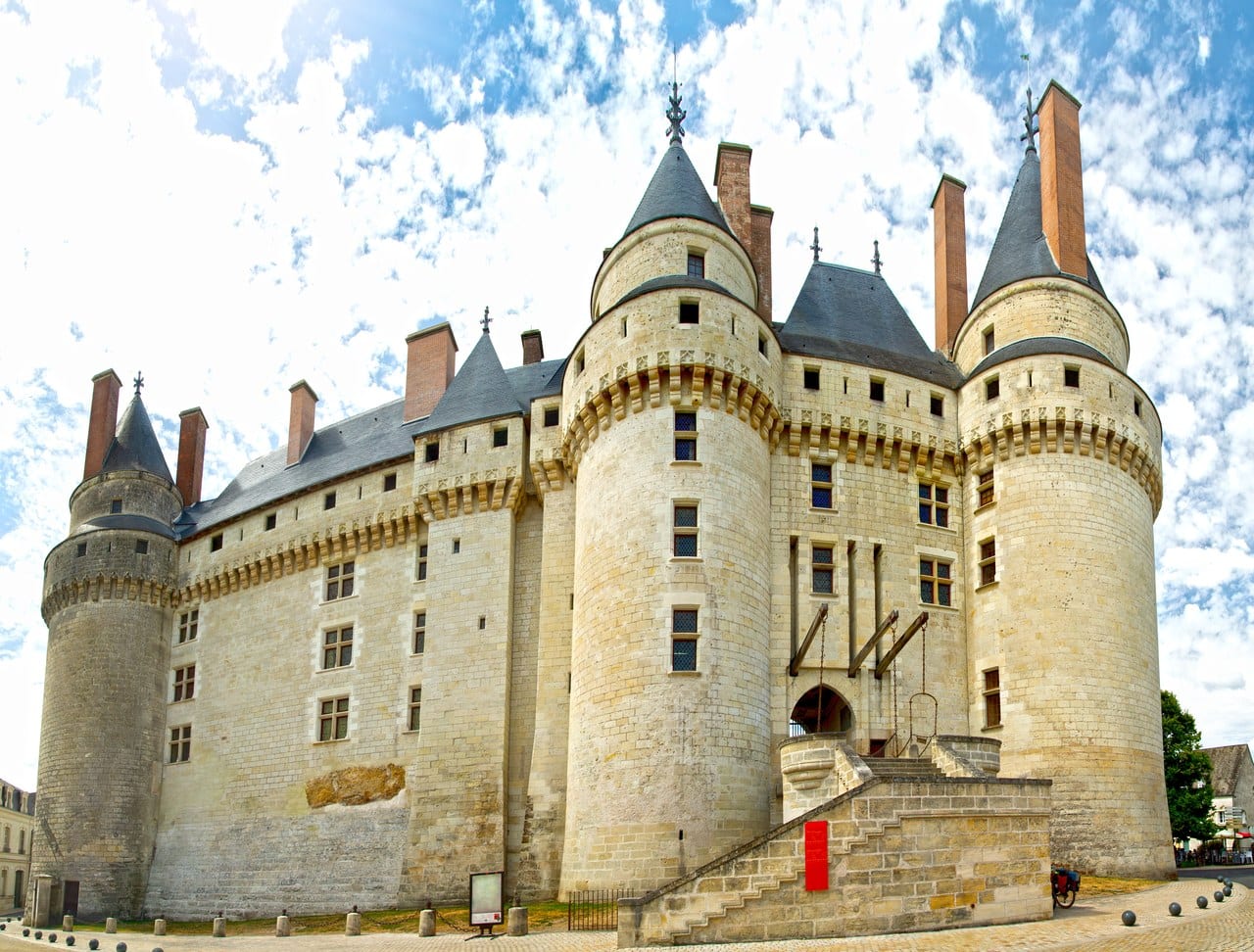
No woman used a Loire château more deliberately than Anne of Brittany used Langeais. On 6 December 1491, at dawn, in the great hall of the castle above the river, she married Charles VIII of France. The match was not a love story but a treaty in a wedding dress. Anne was Duchess of Brittany in her own right, sovereign of the last great fief outside the French crown, and her marriage began the absorption of the duchy into the kingdom. The contract survives in the national library in Paris, and one of its clauses reads like a chess move: if Charles VIII died without a son, Anne was bound to marry whoever inherited his throne. He did, in 1498, and she did, taking Louis XII the next year and becoming the only woman ever crowned queen of France twice.
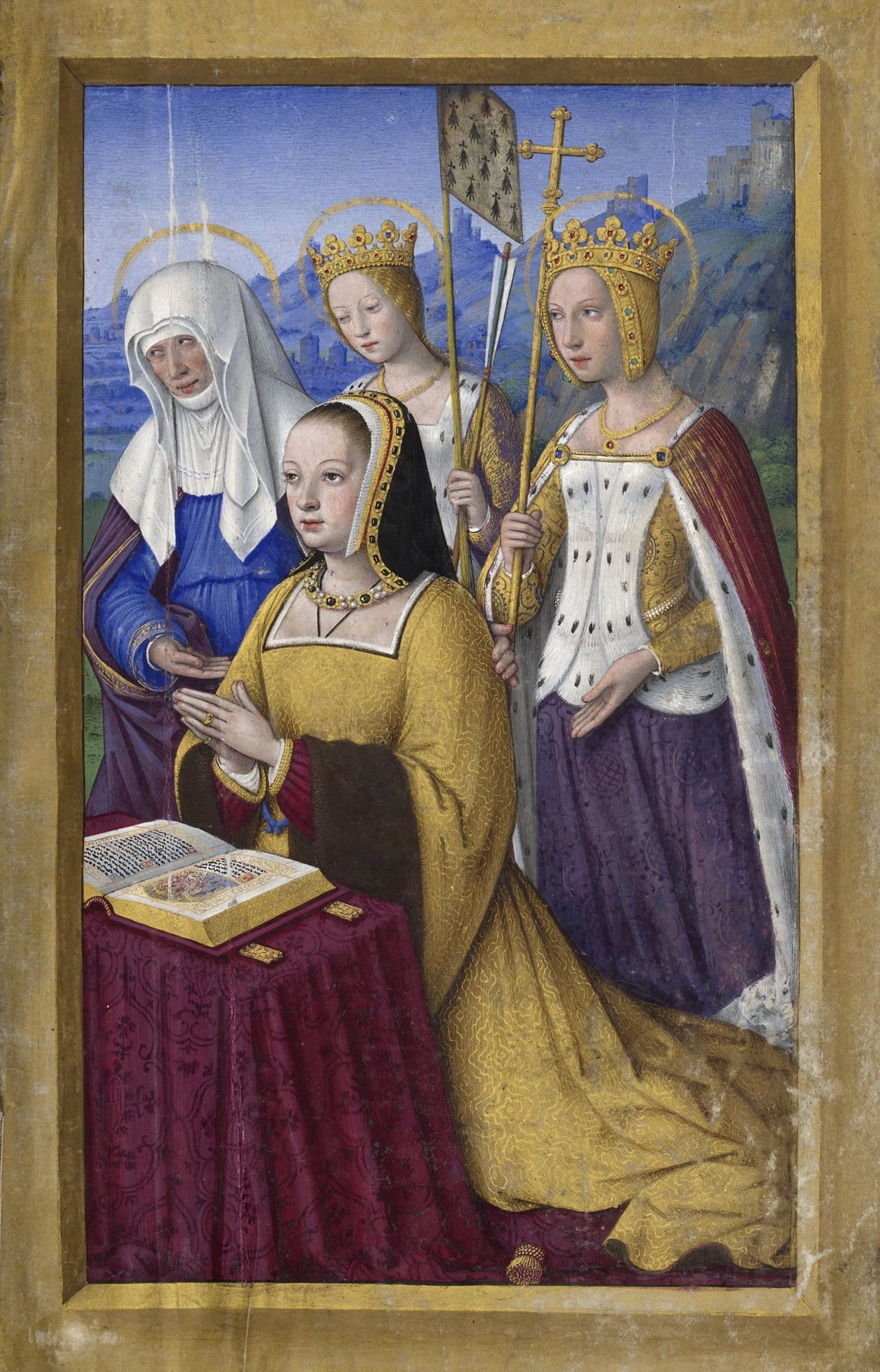
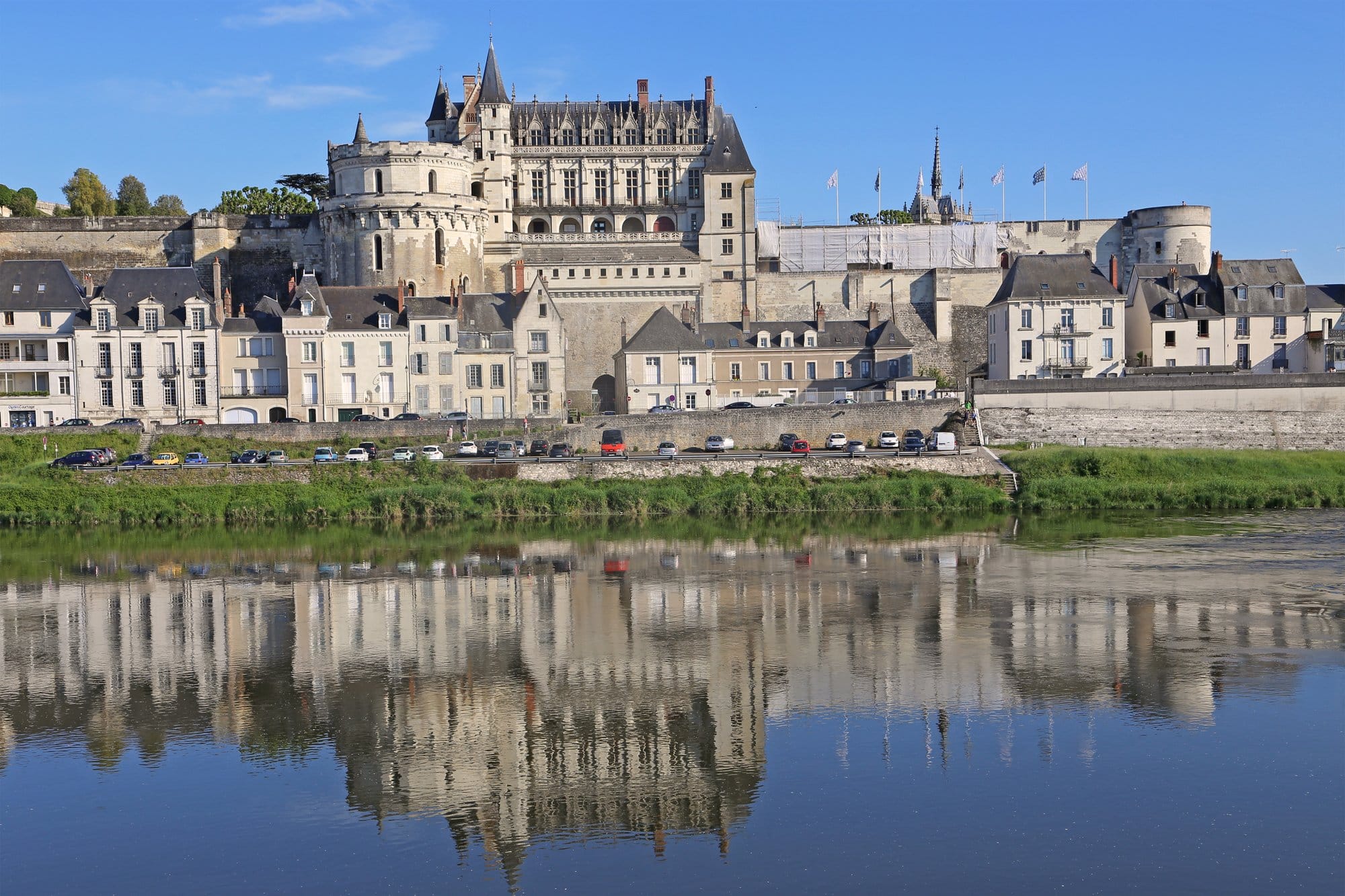
She spent much of both reigns on the Loire. At Amboise, she and Charles VIII drove the transformation of a medieval fortress into a palace touched by the Italian taste the king had brought home from his wars, and the ermines of Brittany, her personal device, still run through the carved stonework there. Amboise was where she kept her household as queen; the château she died in was Blois. She was not, whatever local pride sometimes claims, the builder of a named wing or chapel there, and this essay does not credit her with one. What the château’s own historians do call her is a patron of the first order, a woman who spent on manuscripts, music, gardens, and architecture, and who helped turn the French court into a place that looked to Florence and Milan for its ideas. Among the treasures made in her name were some of the most beautiful illuminated manuscripts of the age, commissioned by a queen who grasped that a court was judged by what it read as much as by what it built.
That distinction matters, because Anne’s power was never the mason’s kind. She could not lay a stone, but she could decide which artists a kingdom paid, which books its princes read, and whether Brittany kept its liberties. Her emblem, the ermine, carried a Breton motto that later tradition rendered as a vow never to be soiled, and whether or not she ever spoke the words, the animal appears wherever she left a mark. When she died at Blois in January 1514, still only thirty-six, the crown she had worn twice passed on and the duchy she had guarded slid, within a generation, fully into France. The valley kept the ermines.
Louise of Savoy: The Regent Who Ran a Kingdom
Louise of Savoy never sat on the throne, and twice she ran the country from beside it. Widowed at nineteen in 1496, she raised her two children with a single-mindedness her own motto announced: libris et liberis, for books and for children. One of those children was Marguerite, the future queen of Navarre and one of the sharpest minds of the age. The other was a boy who would be François I. Louise educated them both on the strength of the family library at Cognac, and when her son became king in 1515 she did not retire into the role of dowager.
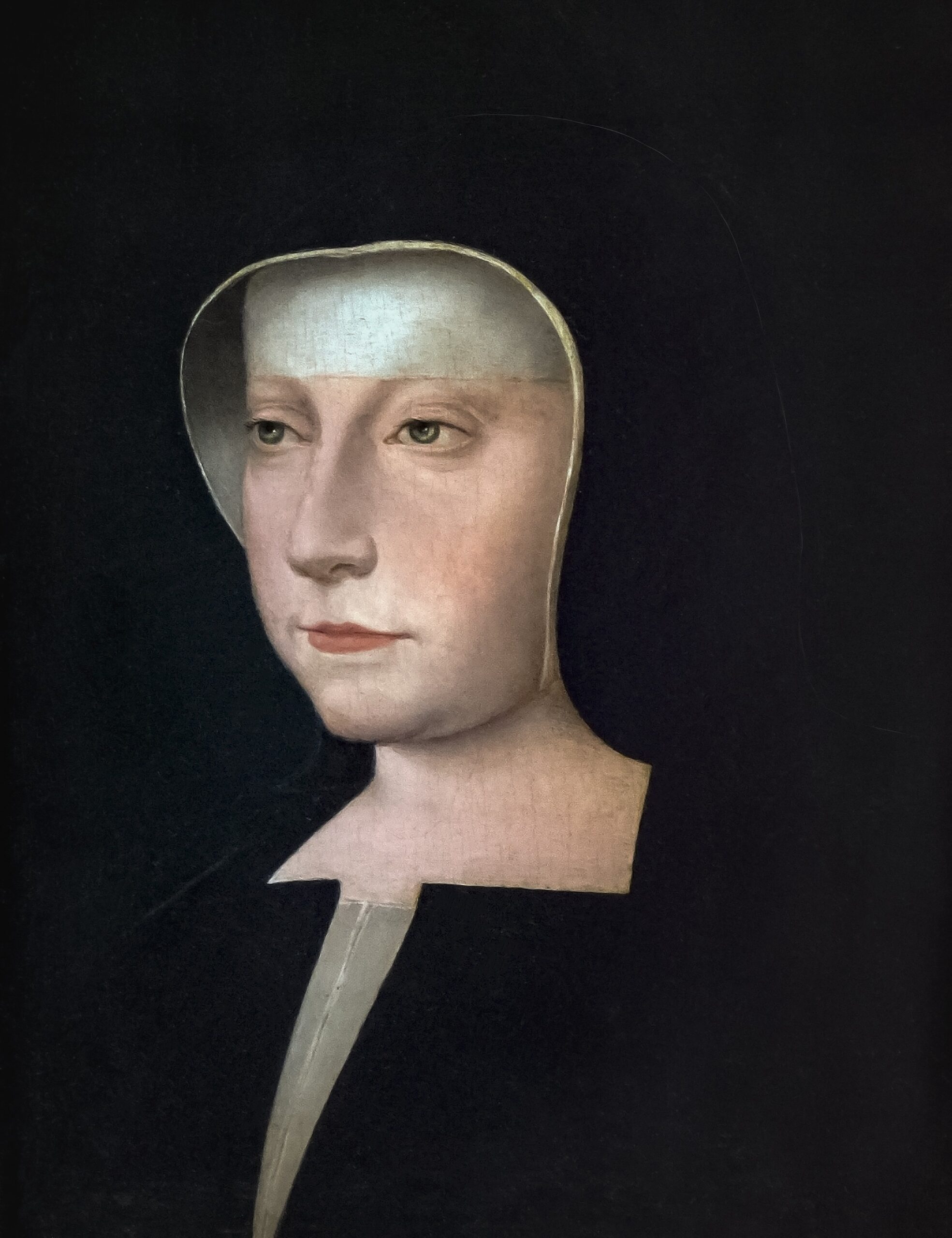
She governed. While François crossed the Alps to win Marignano that year, his mother held France as regent, and she did it from Amboise, the château where she had herself been raised under the formidable Anne de Beaujeu. That first regency was a rehearsal. The real test came in 1525, when François was captured at the catastrophe of Pavia and carried off a prisoner to Madrid. For the better part of two years, with the king absent and the kingdom exposed, Louise of Savoy was France. She raised money, held the frontier, kept the alliances from collapsing, and negotiated for her son’s release.
Holding a kingdom together in wartime took money, and money made enemies. Louise had entrusted large sums to Jacques de Beaune, baron de Semblançay, the veteran superintendent of France’s finances, to pay for the king’s campaigns; when the accounts were finally reckoned, a bitter quarrel broke out over what belonged to the crown and what belonged to her. That dispute helped bring the old financier down. In 1527 Semblançay was condemned and hanged at Montfaucon, in a trial historians read as more political than criminal, and one in which the regent was no bystander. The same scandal was about to reach a château downriver, where another woman would be left to live with its wreckage.
Her masterpiece was a treaty. In August 1529 she met Margaret of Austria at Cambrai, and the two women settled a war their nephews and sons had failed to end, in an agreement that history has called the Ladies’ Peace. France gave up its claims in Italy; the Emperor gave up his claim to Burgundy; François came home. That a European settlement of that scale was brokered by two women, negotiating as principals rather than messengers, was remarkable enough that the name stuck.
Louise left the valley a building project as well as a peace, though this one never rose. At Romorantin, on a seigneury that had come to her family, she meant to raise something extraordinary, and in 1516 she commissioned the man best placed to imagine it: Leonardo da Vinci, then living out his last years under her son’s protection. Leonardo drew a palace and something close to an ideal city, with a canal linking the Loire to the Sauldre, a scheme whose ambition would later echo at Chambord. Earthworks began. Then Leonardo died in 1519, plague came to the site, and the great design was abandoned to paper. The Loire’s most famous château owes part of its imagination to a project a regent started and the valley never finished.
Philippa Lesbahy and the Building of Azay-le-Rideau
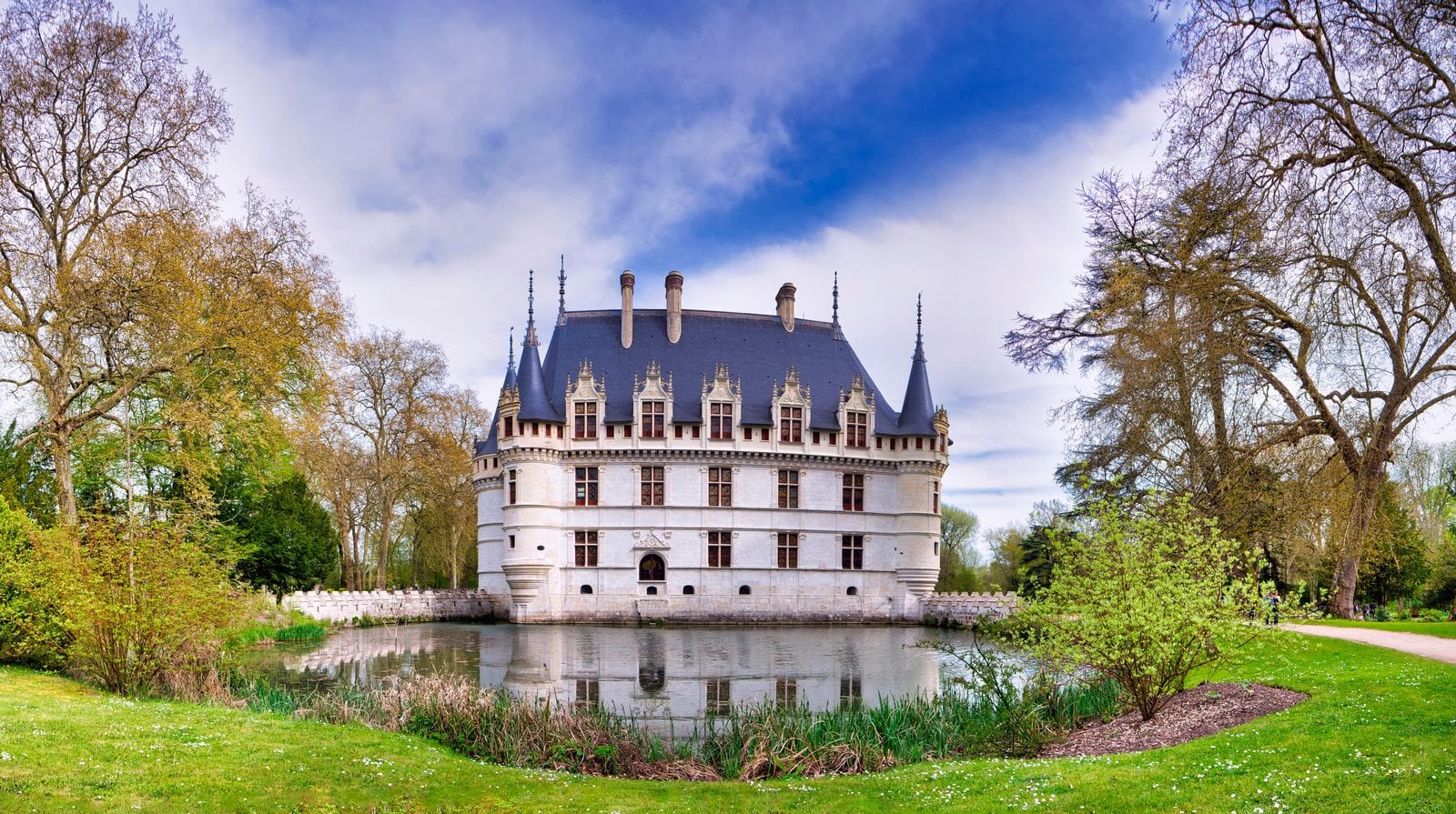
Azay-le-Rideau is the most photographed of the smaller Loire châteaux, a white Renaissance house standing in its own reflection on the Indre, and it was finished by a woman whose husband had to run for his life. The builder of record was Gilles Berthelot, a financier who rose to be master of the king’s accounts and mayor of Tours, and who between 1518 and the late 1520s set an architect named Étienne Rousseau to raise a modern house on an old moated site. Berthelot had the money and the ambition. What he did not have, in the end, was time.
His cousin was Jacques de Beaune, baron de Semblançay, the superintendent of France’s finances whose quarrel with the regent has already crossed this story, and in 1527 that connection turned lethal. Semblançay was condemned and hanged, and the disgrace reached across the family. Berthelot lost his offices and fled to Metz, dying two years later at Cambrai, his fine new château unfinished and his fortune gone. Into that wreck stepped his wife. The château’s own historians credit Philippa Lesbahy with taking over the project and bringing it to completion, holding the site together after the man who commissioned it had vanished from it.
It is a quieter story than a regency or a royal wedding, and the sources are thinner; the temptation to make Philippa the day-to-day mistress of the works from the start is one the record does not support, and this account resists it. What the record does support is enough. A house begun by a man in favour was carried across the line by a woman in disgrace, in a decade when a fallen financier’s property was not safe and a fallen financier’s widow had every reason to walk away. She did not. The crown eventually granted Azay to another family in the 1530s, but the château that changed hands was a finished one, and the person who finished it was Philippa Lesbahy.
Her Azay is worth reading as architecture as much as biography. The building turns its back on the fortress and faces the water; its celebrated staircase is a straight Italian flight rather than a defensive spiral; and the whole conception belongs to the confident, decorative early Renaissance that the Loire made its own. A woman completed one of its purest examples, at the exact moment her family’s name had become dangerous to carry.
Catherine de’ Medici Beyond Chenonceau
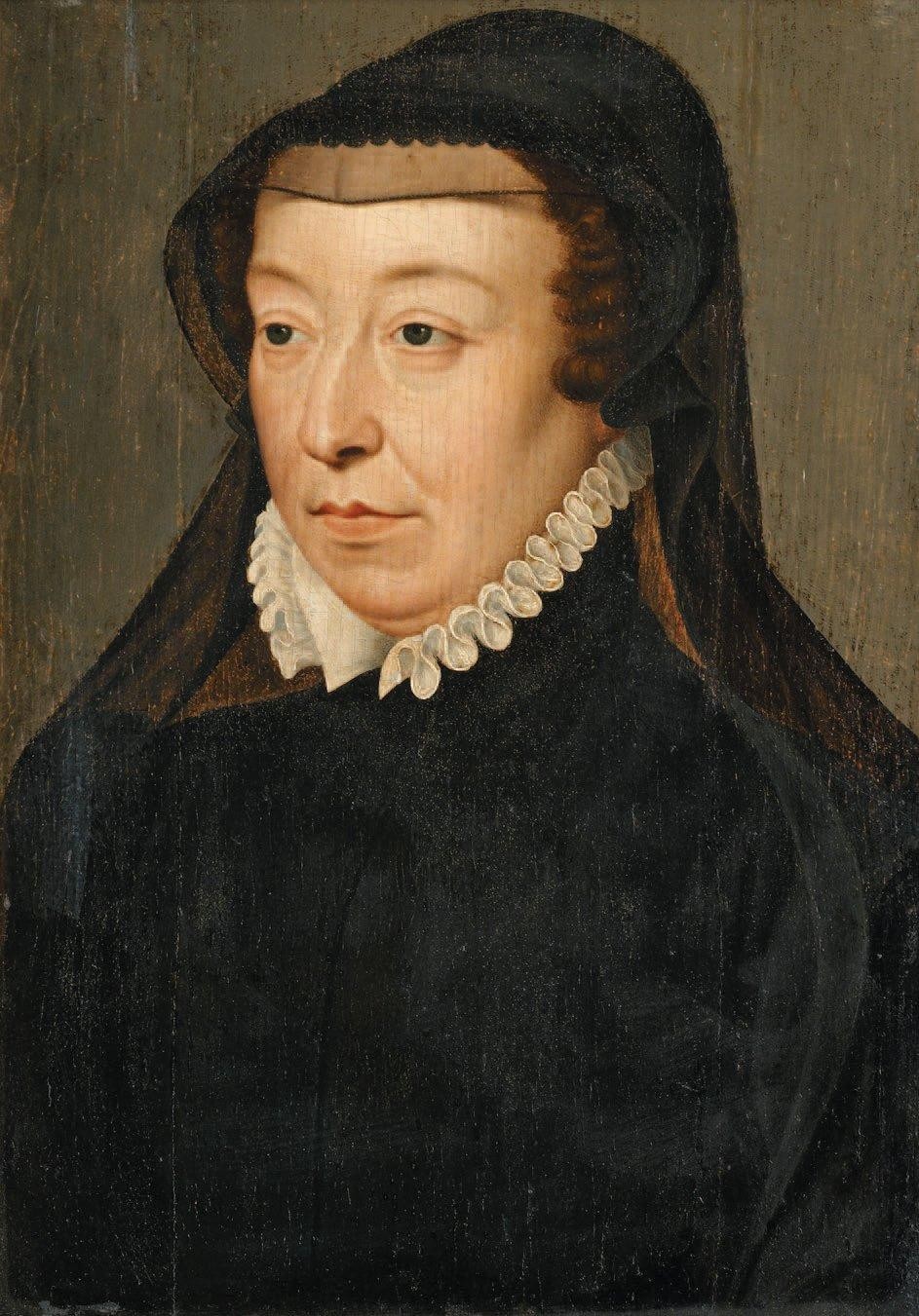
Catherine de’ Medici is the valley’s most famous woman, and almost everything the popular imagination knows about her belongs to a single château that is not the subject of this essay. Chenonceau, the exchange, the rivalry with Diane de Poitiers: that is a story told in our ladies of the Loire, and it is a good one. Seen from the rest of the Loire, Catherine looks different. She was, before she was the black-clad widow of legend, an owner and a patron with holdings up and down the river.
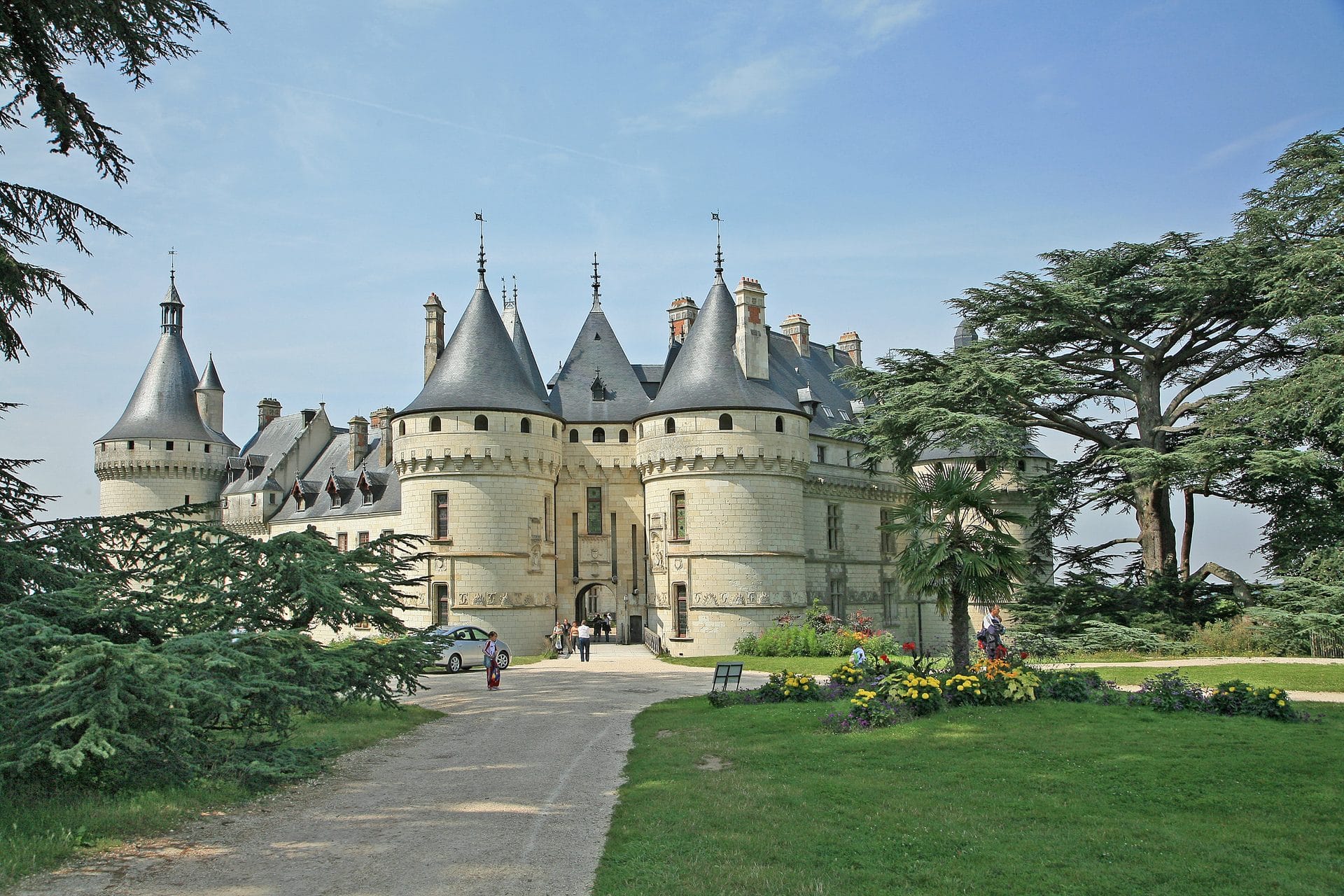
Chaumont-sur-Loire was hers first. She bought the château in 1550, nine years before her husband’s death changed her life, and the estate was a profitable one, drawing tolls from the river and rents from a spread of farmland. She seems to have treated Chaumont less as a home than as a way-station, a place to break the ride between Amboise and Blois, and she kept it only about a decade. After Henri II was killed in 1559, Catherine gave up Chaumont in exchange for the château she wanted more; the details of that swap belong to the Chenonceau story. A room at Chaumont still carries her name, kept in memory of the queen who bought the place.
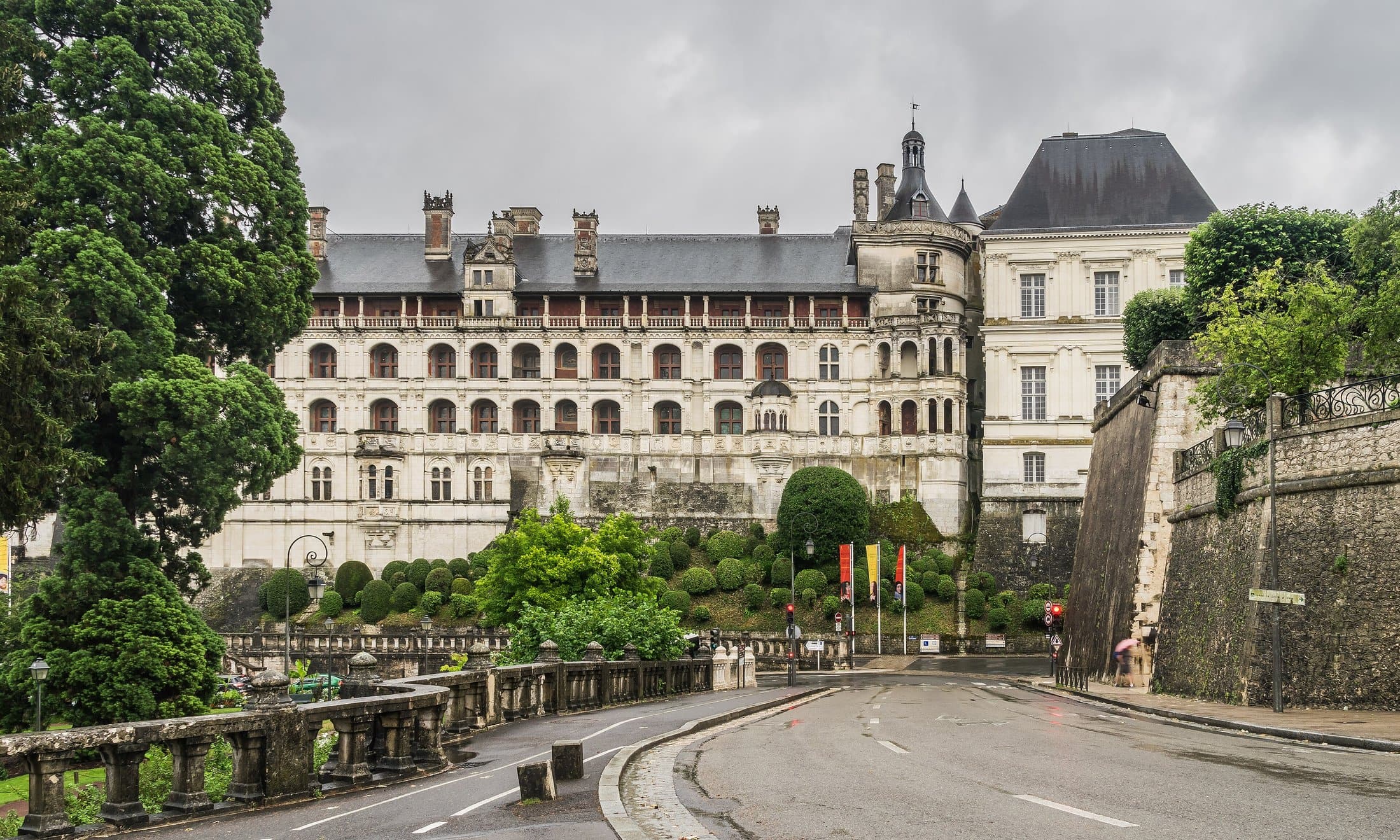
Blois is where her life ended. Catherine de’ Medici died there on 5 January 1589, in a set of royal apartments the château still shows, and the studiolo next door is one of the most seductive rooms of the French Renaissance: walls of carved and gilded oak panels, four of which swing open to reveal hidden cabinets. Popular legend, encouraged by a novelist or two, insists those cabinets held poisons. Their keepers say only that they held small precious things, and the honest version is the less lurid one. The legend of Catherine the poisoner has outlived most of the facts.
What the facts sustain is a different reputation. Catherine governed France as queen mother and regent through the reigns of three of her sons, held a fracturing kingdom together through decades of religious war, and spent on the arts and on building with a scale and seriousness that made her one of the great patrons of her century. Strip away the astrologers whom legend posts in every tower she owned, and a real woman remains: an Italian who arrived as a merchant-banker’s orphan and left as the most powerful person in France, with a Loire château at either end of her adult life. She built, collected, and commissioned on a scale few French monarchs of either sex matched, and she did it while steering the crown through the worst civil bloodshed the country had seen since the English wars.
A Valley of Female Power
Set these five lives beside one another and a pattern surfaces that no single château explains. Across roughly a hundred and fifty years, from Agnès Sorel in the 1440s to Catherine de’ Medici’s death in 1589, the Loire was a place where women held real power and left real marks. Their forms of power differed. A favourite turned a king’s affection into a tomb that still draws visitors; a duchess used a wedding to fold a nation into France; a regent governed a kingdom twice and brokered a European peace; a financier’s wife finished a masterpiece under threat; a queen mother owned châteaux at both ends of a long and violent life.
None of them fit the tourist’s shorthand of the Loire as a chain of pretty royal retreats. These were working seats of authority and ambition, and women were not decorative in them. They inherited, bought, governed, patronized, and built. Much of this was widow’s power. Agnès Sorel aside, each of these women reached her fullest authority when a husband or a son lay dead, absent, or captive, in the room a missing man had left open. Where the men’s story is one of kings moving a court between hunting grounds, the women’s is one of the châteaux being used for something: to seal a treaty, to raise an heir, to bury a love, to survive a disgrace. The valley reads more honestly when both stories are on the map.
It is also why the Chenonceau saga, for all its fame, undersells the theme. Six women shaped one château on the Cher, and their story deserves its own telling. But the valley did not concentrate its women at a single bridge. It spread them from Loches to Chaumont, from Langeais to Azay to Blois, and every one of those houses answers to a woman’s name if you know where to look.
Seeing Their Loire Today
The five châteaux at the heart of this story sit within an easy few days’ driving of one another, and visiting them in something like chronological order makes the theme legible on the ground. Begin at Loches, where the royal city on its rock holds both Agnès Sorel’s tomb in the collegiate church of Saint-Ours and one of the oldest great keeps in France; the effigy alone is worth the climb, and Saint-Ours is free to enter, separate from the keep and Logis Royal ticket. From there it is a short run west to Langeais, whose great hall stages the 1491 marriage with costumed figures, and on to Azay-le-Rideau, Philippa Lesbahy’s finished house, mirrored in the Indre. Amboise and Blois anchor the eastern end, the first carrying the ermines of Anne of Brittany, the second holding both her death chamber and Catherine de’ Medici’s, along with the studiolo and its secret-cabinet panels. Chaumont, high above the river between them, keeps the room that remembers Catherine’s purchase. Travelers with an extra day can add Chinon, where Charles VII’s queen held her court while her husband kept his favourite at Loches, which closes the triangle of that particular royal household.
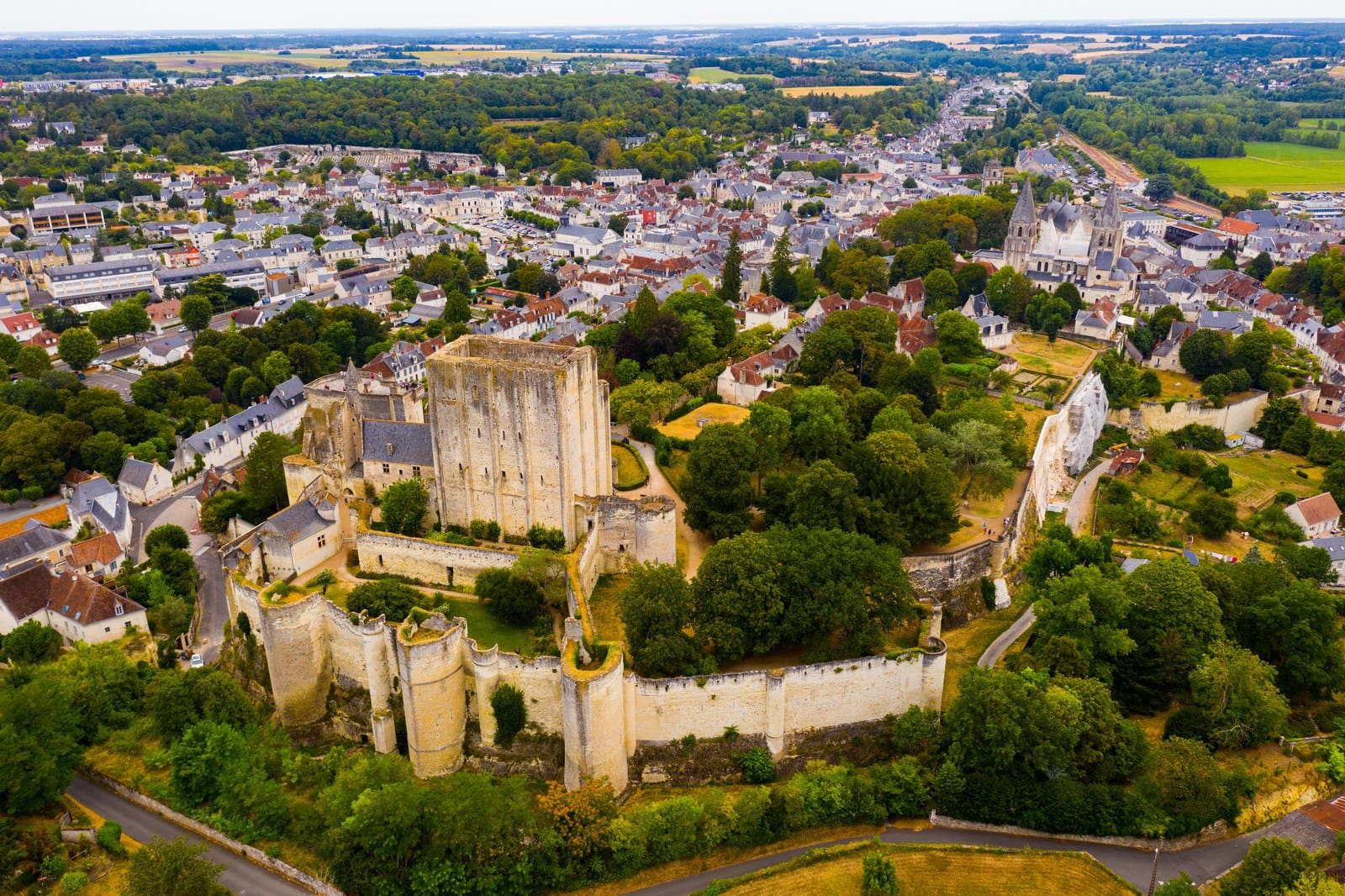
Timing rewards a little thought. Chaumont mounts its International Garden Festival from late April into early November, when the grounds are at their fullest, and high summer brings the largest crowds to Loches and Amboise. Most of the route is reachable by rail from Tours: Amboise and Blois sit on the main line, Langeais and Azay-le-Rideau on the local Touraine services, while Loches, at the end of a slower branch, rewards a car.
Guided tours and skip-the-line tickets for the royal city of Loches and the eastern châteaux are worth booking in high summer, when Loches and Amboise both draw crowds. Day tours and timed-entry tickets across the valley can be arranged through GetYourGuide, and for a base within reach of Amboise and Blois you can compare hotels on Booking.com.
Some links on this page are affiliate links, which means StoneKeep Atlas may earn a small commission, at no extra cost to you, if you book through them.
For the fuller Chenonceau chapter of this same history, and the six women who made that one château their own, read our companion piece on the ladies of the Loire. Between the two essays, the valley’s women finally get the map they have always deserved.
Conclusion
The Loire’s kings named its châteaux, but its women gave many of them their meaning. A favourite made Loches a shrine, a duchess made Langeais a treaty, a regent made Amboise a seat of government and Romorantin a might-have-been, a financier’s wife made Azay a finished masterpiece, and a queen mother made Chaumont and Blois the bookends of the most powerful life of her century. Read together, their stories turn the valley from a gallery of royal architecture into a record of how women held power in an age that rarely let them hold it openly. Chenonceau is the chapter everyone knows. The rest of the Loire, once you look, is full of them.
Principal Sources
- Cité Royale de Loches (Département d’Indre-et-Loire). “Agnès Sorel.” citeroyaleloches.fr.
- Ministère de la Culture, POP / Palissy. “Tombeau (gisant) d’Agnès Sorel,” reference PM37000286. pop.culture.gouv.fr.
- Koninklijk Museum voor Schone Kunsten Antwerpen. “Madonna Surrounded by Seraphim and Cherubim” (Jean Fouquet). kmska.be.
- Château de Langeais. “Presentation of the Castle.” chateau-de-langeais.com.
- Bibliothèque nationale de France, Gallica. Marriage contract of Anne of Brittany and Charles VIII, Langeais, 6 December 1491. gallica.bnf.fr.
- Château Royal d’Amboise. “Anne of Brittany” and “Catherine de’ Medici.” chateau-amboise.com.
- Château Royal de Blois. “Les personnages illustres” and “The Royal Apartments.” chateaudeblois.fr.
- Société Internationale pour l’Étude des Femmes de l’Ancien Régime (SIEFAR). “Louise de Savoie.” siefar.org.
- Université de Tours, Marignan 2015. “Louise de Savoie (1476-1531).” univ-tours.fr.
- Presses universitaires François-Rabelais. “Louise de Savoie et le projet de Léonard de Vinci à Romorantin.” OpenEdition Books.
- Centre des monuments nationaux, Château d’Azay-le-Rideau. “Gilles Berthelot.” azay-le-rideau.fr.
- Ministère de la Culture, POP / Mérimée. “Château d’Azay-le-Rideau,” reference PA00097546. pop.culture.gouv.fr.
- Domaine de Chaumont-sur-Loire. “Catherine de’ Medici.” domaine-chaumont.fr.
Prices, opening hours, and tour availability change; confirm details with each château before you travel. This account draws on the operator and heritage-authority sources listed above and, for the disputed matters noted in the text (the sculptor of Agnès Sorel’s effigy, the cause of her death), leaves open questions open rather than resolving them for effect.
Image credits. Hero, Château d’Amboise on the Loire: W. Bulach, CC BY-SA 4.0; Château de Blois, François I wing: Krzysztof Golik, CC BY-SA 4.0; Fouquet Madonna (Agnès Sorel): Jean Fouquet, Royal Museum of Fine Arts Antwerp, public domain; Agnès Sorel effigy, Loches: Bastenbas, CC BY-SA 4.0; Anne of Brittany, Grandes Heures: Jean Bourdichon, Bibliothèque nationale de France, public domain; Château de Langeais: Flaviu Boerescu / Adobe Stock; Louise of Savoy: School of Jean Clouet, Fondation Bemberg, Toulouse, public domain; Château d’Azay-le-Rideau: Adobe Stock (licensed); Catherine de’ Medici: Workshop of François Clouet, public domain; Château de Chaumont-sur-Loire: W. Bulach, CC BY-SA 4.0; Royal city of Loches: JackF / Adobe Stock. Freely licensed images are resized to fit; otherwise unaltered.