
How Castles Fell
Picture a medieval siege and you probably picture a breach: engines batter a wall until it gives way, and the attackers pour through the gap. Our own castle guides tell a quieter story. At Dover in 1216 a French mine brought down a gate tower, and the garrison threw the assault back through the breach and held the castle. Count every siege they narrate that a source confirms, code each one by how it ended, and the walls turn out to have been broken far less often than they were bypassed. Of the 37 castle losses in our ledger whose mechanism a source names, 5 came by storm or mine. The other 32 were surrenders, starvations, betrayals and garrisons that broke out or slipped away by night.
That count starts with a definition, and so does the claim the ledger was built to test. “Never taken” is said of a great many castles, and it can mean four different things: that a castle was never besieged, never taken by force, never taken at all, or never destroyed. A castle can pass one of those tests and fail the next, so the honest answer to “was it ever conquered?” names the test before it gives the verdict.
This ledger counts every siege, attempted siege or forced change of hands between 1066 and 1500 that a StoneKeep castle guide narrates and a source carries, coded by how it ended. Fourteen sieges that our guides narrate from those years are left out: 10 because no source we could reach confirms a siege of the castle as the guide tells it, 1 because it was not a siege at all, and 3 that the rules below leave out. Handovers by treaty, purchase or submission without a siege are listed separately and left out of every percentage; sieges after 1500 fall outside the ledger and are not counted.
It is also a biased sample: castles that survived well enough to carry a travel guide, and sieges that the guides happen to tell. Its limits are printed beside its results.
What Counts as a Castle Falling
Historians do not use “siege” in one sense. Matthew Strickland, writing on England and Normandy between 1066 and 1217, reserves it for the protracted investment a commander settled into when guile, intimidation or a direct assault had failed. English Heritage calls every method of attack a “siege attack”, from the ladder to the blockade. A ledger has to pick one, and ours takes the wider net: a row is a siege, an attempted siege, or a forced change of hands of a castle, as long as one of our guides tells it and a source carries it. An attack on the castle itself counts even when it failed, including one that damaged the castle while its holder kept it. A siege of the town below, where no source shows the castle besieged, does not. Rochester’s siege of 1215 is not here because no StoneKeep guide covered Rochester when this ledger was compiled in October 2026. Dunnottar in 1297 is not here either: our Dunnottar guide gives William Wallace’s capture of the castle as a tradition drawn from Blind Harry’s poem, and the ledger counts only what a source confirms.
The net also catches a papal palace, a fortified abbey and a Saxon fortress. Where the line between those and a castle falls is argued in our comparison of castle, palace and fortress; each was defended and attacked, which is the only test the ledger applies.
Every row then takes one code for how it ended, written down before a single row was coded:
| Code | We use it when the sources say |
|---|---|
| Held | the besiegers withdrew, were driven off or gave up, and the holder kept the castle |
| Surrendered | the garrison capitulated; we record whether on terms, at the victor’s will, or with terms unrecorded |
| Starved out | a source gives hunger or thirst as the reason the garrison gave in |
| Stormed | taken by assault: escalade (scaling the walls with ladders) or storm |
| Mined or breached | a mine or a breach is the decisive mechanism a source names |
| Betrayed or surprised | treachery, a ruse or a surprise; as a main code, with no sustained siege |
| Abandoned | the garrison fled or broke out and the besieger walked into an empty castle |
| Uncertain | the sources do not support one code, or they disagree about the outcome |
| Handed over without a siege | treaties, custody and submissions with no siege: their own list, outside every percentage |
A row may carry a second code, and a second code may also note artillery. A separate flag records whether the winner razed or slighted the castle afterward, which never changes how the siege is coded.
One definition matters more than the rest. In this ledger, taken by force means taken by assault: storm, escalade, breach or mine. A garrison starved into surrender, or bargained out on terms, was taken. It was not taken by force.
Like “oldest” in our page on the oldest castle, “largest” in the guide to the world’s largest castles and “most castles” in our look at which country has the most castles, “never taken” means nothing until somebody says what is being measured.
The Siege Ledger, 1066-1500
The table below is the ledger itself, built from the same data file as every count on this page and the download beneath it, so no figure here was typed by hand. Rows run in date order, never by any score, and each is usually labeled by the year its siege ended. Dates are as precise as the sources allow. Every row gives the attacker, the holder, the outcome and the sources, and links the guide that tells the story in full; where two sources disagree, the row names both. Every castle in the counts is on the map below.
List the 42 castles on this map
- Dover Castle — Kent, England
- Nuremberg Castle — Bavaria, Germany
- Château de Gisors — Normandy, France
- Cochem Castle — Rhineland-Palatinate, Germany
- Tower of London — London, England
- Windsor Castle — Berkshire, England
- Château Gaillard — Normandy, France
- Château de Chinon — Indre-et-Loire, France
- Carcassonne Castle — Aude, France
- Château de Termes — Aude, France
- Framlingham Castle — Suffolk, England
- Château de Montségur — Ariège, France
- Sterrenberg Castle — Rhineland-Palatinate (Rhein-Lahn district), Germany
- Château de Quéribus — Aude, France
- Rheinfels Castle — St. Goar, Mittelrhein, Rhineland-Palatinate, Germany
- Kenilworth Castle — Warwickshire, England
- Caerphilly Castle — Caerphilly County Borough, Wales
- Château de Fleckenstein — Bas-Rhin, France
- Château du Hohlandsbourg — Haut-Rhin, France
- Reichenstein Castle — Rhineland-Palatinate (Rheinland-Pfalz), Germany
- Sooneck Castle — Rhineland-Palatinate (Mainz-Bingen district), Germany
- Dolwyddelan Castle — Conwy County Borough, Wales
- Dolbadarn Castle — Gwynedd, Wales
- Caernarfon Castle — Gwynedd, Wales
- Harlech Castle — Gwynedd, Wales
- Urquhart Castle — Highland, Scotland
- Stirling Castle — Stirling, Scotland
- Wartburg Castle — Thuringia (Thüringen), Germany
- Edinburgh Castle — City of Edinburgh, Scotland
- Eltz Castle — Rhineland-Palatinate, Germany
- Leuchtenburg Castle — Thuringia (Saale-Holzland-Kreis, near Kahla), Germany
- Conwy Castle — Conwy County Borough, Wales
- Beaumaris Castle — Isle of Anglesey, Wales
- Palais des Papes — Vaucluse, France
- Königstein Fortress — Saxony, Germany
- Kriebstein Castle — Saxony, Germany
- Château de Caen — Normandy, France
- Château de Falaise — Normandy, France
- Hohenzollern Castle — Baden-Württemberg, Germany
- Mont-Saint-Michel — Normandy, France
- Château du Haut-Kœnigsbourg — Bas-Rhin, France
- Château de Puilaurens — Aude, France
| Castle | Country | Dates | Besieger | Holder | How it ended | Note | Sources |
|---|---|---|---|---|---|---|---|
| Dover Castle | England | 1067 | Men of Kent in league with Count Eustace of Boulogne | William I’s garrison (Odo of Bayeux and Hugh de Montfort absent) | Held | An attack, not a sustained siege. | historicengland.org.uk (one source) |
| Nuremberg Castle | Germany | 1105 (after July) | Henry V, in revolt against his father | Garrison and townspeople loyal to Emperor Henry IV (the emperor himself not present) | Surrendered (on terms); also starved out | Nürnberger Jahrbücher, 1833; Achleitner, 1900 | |
| Château de Gisors | France | 1109 | Henry I, King of England (from 1100) and Duke of Normandy (from 1106) | Thibaud Payen, lord of Gisors (conceded the fortress by Robert Curthose in 1101) | Uncertain | Recorded as a change of hands; how is not recorded. | Mesqui and Toussaint, 1990 (one source) |
| Nuremberg Castle | Germany | 1130 to 1130-12 (before Christmas) | King Lothar III with Duke Henry the Proud of Bavaria | Staufer partisans of Conrad and Frederick of Swabia | Surrendered (terms not recorded) | historisches-lexikon-bayerns.de; Allgemeine Deutsche Biographie | |
| Cochem Castle | Germany | 1151 | King Conrad III | Palatine claimant (the guide and sources do not name the holder) | Uncertain | Sources disagree: Thon says besieged and conquered (belagert und erobert), the operator says occupied (besetzte). Neither says how it ended. | rheinische-geschichte.lvr.de; reichsburg-cochem.de |
| Tower of London | England | 1191 | The King’s brother John (count of Mortain) | William Longchamp, Bishop of Ely, Richard I’s chief minister | Starved out (terms not recorded) | hrp.org.uk (one source) | |
| Château de Gisors | France | 1193 | Philip II Augustus | Gilbert de Vascoeuil, captain, for Richard I | Uncertain | Sources disagree: an amicable arrangement (Mesqui and Toussaint, 1990) or treachery (Mesqui, 2011). Neither version describes a siege. | Mesqui and Toussaint, 1990; Mesqui, 2011 |
| Windsor Castle | England | 1193 | John (count of Mortain), in rebellion | King Richard I’s custodians | Uncertain | Recorded as a change of hands; how is not recorded. | british-history.ac.uk (one source) |
| Windsor Castle | England | 1193 | Walter of Coutances, Archbishop of Rouen (constable), leading the barons for Richard I | John’s adherents | Surrendered (terms not recorded) | british-history.ac.uk (one source) | |
| Château Gaillard | France | 1203-09 to 1204-03-06 | Philip II Augustus of France (r. 1180-1223) | Roger de Lacy, constable of Chester, for King John | Mined or breached; also starved out | Powicke, 1913; Guillaume le Breton, ed. Delaborde | |
| Château de Chinon | France | 1204 to 1205-06-23 | Philip II Augustus of France (blockade led by Guillaume des Roches per Delaborde’s note) | King John of England; constable Hubert de Burgh | Stormed | forteressechinon.fr; Rigord continuation, ed. Delaborde | |
| Carcassonne Castle | France | 1209-08-01 to 1209-08-15 | Crusade army under the legate Arnaud Amalric | Raymond-Roger Trencavel, viscount of Béziers and Carcassonne | Starved out (on terms) | remparts-carcassonne.fr; Song of the Albigensian Crusade, ed. Meyer | |
| Château de Termes | France | 1210 to 1210-11-22 | Simon de Montfort and the crusade army (with the bishops of Chartres and Beauvais, the counts of Dreux and Ponthieu, later Lorraine foot) | Raymond de Termes | Abandoned | Pierre des Vaux-de-Cernay, trans. Guizot; forteressesroyalesdulanguedoc.fr | |
| Framlingham Castle | England | 1216 | King John | Roger Bigod II’s garrison | Surrendered (terms not recorded) | The National Archives; english-heritage.org.uk | |
| Windsor Castle | England | 1216-06 to 1216-09 | Barons supporting Louis of France, led by the Count of Nevers | King John; garrison under Fawkes de Bréauté, constable Engelard de Cygony | Held | british-history.ac.uk (one source) | |
| Dover Castle | England | 1216-07-22 to 1216-10-14 | Louis of France (son of Philip II) with rebel barons | King John; Hubert de Burgh, justiciar and constable of Dover | Held | A mine brought down a gate tower; the castle held. | english-heritage.org.uk; english-heritage.org.uk |
| Dover Castle | England | 1217-05-12 to 1217-05 | Louis of France | Henry III’s government; Hubert de Burgh | Held | Broken off because of events elsewhere. | english-heritage.org.uk; english-heritage.org.uk |
| Carcassonne Castle | France | 1240-09-09 to 1240 | Raymond Trencavel II, son of the last viscount, with faidit lords and forces from Aragon, admitted to the Bourg by townsmen | Royal seneschal Guillaume des Ormes, with the archbishop of Narbonne and the bishop of Toulouse in the Cité | Held | A relief force is recorded. The defenders countermined. | Puylaurens, trans. Duvernoy (CNRS); remparts-carcassonne.fr |
| Château de Montségur | France | 1243-05 to 1244-03-02 | French royal army under Hugues des Arcis, seneschal of Carcassonne, with Pierre Amiel, archbishop of Narbonne, and Durand, bishop of Albi | Raymond de Pereille (lord) and Pierre-Roger de Mirepoix (military commander), with the Cathar community | Surrendered (on terms) | Razed or slighted afterward. | montsegur.fr; Puylaurens, trans. Duvernoy (CNRS) |
| Sterrenberg Castle | Germany | 1249 | Anti-king William of Holland | Lords of Bolanden (imperial ministeriales) | Held | Damaged in the attack; the holder kept it. | ebidat.de; kuladig.de |
| Château de Quéribus | France | 1255 to 1255-05 | Pierre d’Auteuil, seneschal of Carcassonne, for Louis IX; Olivier de Termes credited with the operation | Chabert de Barbaira | Surrendered (on terms) | forteressesroyalesdulanguedoc.fr; pop.culture.gouv.fr | |
| Rheinfels Castle | Germany | 1255 to 1256 | Rhenish League of Cities (Rheinischer Bund / Landfriedensbund) | Count Diether V of Katzenelnbogen | Held | ebidat.de; regionalgeschichte.net | |
| Windsor Castle | England | 1263-07-26 | Simon de Montfort | The Lord Edward’s foreign garrison | Surrendered (terms not recorded) | british-history.ac.uk (one source) | |
| Dover Castle | England | 1265-10 | The Lord Edward (son of Henry III), with royalist prisoners who seized the great tower from within | Eleanor de Montfort; deputy constable Sir John de la Haye | Surrendered (on terms) | english-heritage.org.uk; english-heritage.org.uk | |
| Kenilworth Castle | England | 1266-06-25 to 1266-12 | Henry III and the Lord Edward | Supporters of the late Simon de Montfort (Henry de Hastings among the leaders) | Starved out (on terms); also surrendered | english-heritage.org.uk; british-history.ac.uk | |
| Caerphilly Castle | Wales | 1270-10-13 to 1270-10 | Llywelyn ap Gruffudd, Prince of Wales | Gilbert de Clare (works unfinished) | Uncertain | The castle was unfinished. | Brut y Tywysogion, ed. Williams; Renn, Caerphilly Castle (Cadw) |
| Caerphilly Castle | Wales | 1272-02 | Gilbert de Clare’s men (the constable of Cardiff Castle) | Custodians for the bishops of Coventry and Lichfield and of Worcester | Betrayed or surprised | Renn, Caerphilly Castle (Cadw) (one source) | |
| Château de Fleckenstein | France | 1276 | King Rudolf I of Habsburg (on behalf of Bishop Friedrich von Bolanden of Speyer) | the lord of Fleckenstein (Wolfram per the operator and the MGH editor; Heinrich per Redlich’s index) | Surrendered (at the victor’s will) | fleckenstein.fr; Annales Basileenses, MGH | |
| Château du Hohlandsbourg | France | 1281-12 to 1281-12-06 | Otto von Ochsenstein, Landvogt (grand bailli) of Alsace, leading burghers of Colmar | Siegfried von Gundolsheim, deposed provost of Colmar and builder of the castle | Uncertain | Razed or slighted afterward. | chateau-hohlandsbourg.com; Alsace monuments society Bulletin, 1863 |
| Reichenstein Castle | Germany | 1282 | King Rudolf I of Habsburg | Dietrich von Hohenfels | Uncertain | Razed or slighted afterward. | regionalgeschichte.net; kuladig.de |
| Sooneck Castle | Germany | 1282 | King Rudolf I of Habsburg | Lords of Hohenfels | Uncertain | Razed or slighted afterward. | tor-zum-welterbe.de; regionalgeschichte.net |
| Dolwyddelan Castle | Wales | 1283-01-18 | Edward I’s army | Welsh garrison of Llywelyn ap Gruffudd’s line (Llywelyn killed December 1282) | Surrendered (terms not recorded) | No siege is attested. | The History of the King’s Works; Ashbee, Conwy Castle (Cadw) |
| Dolbadarn Castle | Wales | 1283-05 | Edward I’s army | Dafydd ap Gruffudd (his last remaining stronghold) | Uncertain | Recorded as a change of hands; how is not recorded. | Taylor, Caernarfon Castle (Cadw); The History of the King’s Works |
| Caernarfon Castle | Wales | 1294-09 to 1294 | Welsh rebels in the revolt led by Madog ap Llywelyn | English crown (castle unfinished; town of the new borough, sheriff killed) | Uncertain | Sources disagree on how: the King’s Works overview says “the Welsh stormed Caernarvon”, Taylor’s King’s Works chapter that it was captured and sacked. The castle was unfinished. | The History of the King’s Works; Taylor, Caernarfon Castle (Cadw) |
| Caernarfon Castle | Wales | 1295 | Edward I’s forces | Welsh rebels of Madog ap Llywelyn’s revolt | Uncertain | Recorded as a change of hands; how is not recorded. | Taylor, Caernarfon Castle (Cadw); Cadw |
| Harlech Castle | Wales | 1295-04 | Welsh rising under Madog ap Llywelyn | English crown (custody: Robert de Staundon, justice of North Wales) | Held | A blockade. Supplied by sea. | Morris, 1901; Taylor, Harlech Castle (Cadw) |
| Urquhart Castle | Scotland | 1296 | Edward I of England | Scots (lordship of John Comyn) | Uncertain | Recorded as a change of hands; how is not recorded. | historicenvironment.scot; Historic Environment Scotland |
| Stirling Castle | Scotland | 1304-04-22 to 1304 | Edward I of England | Scottish garrison under Sir William Oliphant | Surrendered (at the victor’s will) | blog.historicenvironment.scot; Historic Environment Scotland | |
| Wartburg Castle | Germany | 1306 to 1308 | Royal troops of King Albrecht I (Habsburg), Eisenach townsmen and a Thuringian league of towns | Wettin defenders (sons of Landgrave Albrecht: Friedrich ‘der Freidige’) | Held | wartburg.de; wartburg.de | |
| Edinburgh Castle | Scotland | 1314-03-14 | Scots under Thomas Randolph, Earl of Moray | English garrison (constable killed) | Stormed; also betrayed or surprised | Razed or slighted afterward. | Caldwell, 2016; edinburghcastle.scot |
| Stirling Castle | Scotland | 1313-06 to 1314-06 | Scots under Edward Bruce, for Robert I | English garrison under Sir Philip de Mowbray | Surrendered (on terms) | A relief attempt failed. Razed or slighted afterward. | portal.historicenvironment.scot; Historic Environment Scotland |
| Caerphilly Castle | Wales | 1316-01-28 to 1316-03 | Llywelyn Bren | Crown keeper (lordship of Glamorgan in the king’s hands; keeper William de Berkerolles) | Held | A relief force is recorded. | Renn, Caerphilly Castle (Cadw); Cadw |
| Caerphilly Castle | Wales | 1326 to 1327-03 | Queen Isabella’s forces (a William la Zouche leading; which of two men is unsettled) | Garrison of Edward II’s party under Sir John de Felton and Hugh Despenser’s son Hugh | Surrendered (on terms) | Calendar of Patent Rolls, Edward II; Renn, Caerphilly Castle (Cadw) | |
| Caerphilly Castle | Wales | 1329-02 to 1329 | William la Zouche of Mortimer, with Eleanor de Clare (Despenser’s widow) in his company | Crown custodians (Edward III’s government) | Uncertain | Calendar of Patent Rolls, Edward III; Renn, Caerphilly Castle (Cadw) | |
| Eltz Castle | Germany | 1331 to 1333 | Archbishop-Elector Balduin (Baldwin) of Luxembourg, Trier | Johann von Eltz and the Eltz Ganerben (allied with Ehrenberg, Schöneck, Waldeck) | Surrendered (on terms) | A blockade. Razed or slighted afterward. | Wagener and Schmidt, 2010/11; kuladig.de |
| Stirling Castle | Scotland | 1336 | English (Edward III) | Scots (castle partly destroyed after 1314) | Uncertain | Recorded as a change of hands; how is not recorded. | historicenvironment.scot; Historic Environment Scotland |
| Stirling Castle | Scotland | 1342 | Scots | English garrison | Uncertain | Recorded as a change of hands; how is not recorded. | historicenvironment.scot; Historic Environment Scotland |
| Leuchtenburg Castle | Germany | 1392 | Margrave Friedrich ‘the Warlike’ of Meissen (Wettins) | Heinrich von dem Paradies, Erfurt burgher, pledge-holder from 1389 (owner: counts of Schwarzburg) | Stormed | Razed or slighted afterward. | Rothe, ed. Liliencron; Lehfeldt, 1888 |
| Caernarfon Castle | Wales | 1401 | Owain Glyndŵr’s forces | English crown garrison | Held | An attack, not a sustained siege. | RCAHMW Caernarvonshire inventory (one source) |
| Conwy Castle | Wales | 1401-04-01 | Rhys and Gwilym ap Tudur (rebels of the Glyndŵr rising) | English crown garrison (Henry Percy, Hotspur, constable) | Betrayed or surprised | Ashbee, Conwy Castle (Cadw); Adam of Usk, trans. Thompson | |
| Conwy Castle | Wales | 1401 to 1401-05-28 | Crown forces (Usk: ‘the prince and the country’; DNB Percy: Hotspur) | Rhys and Gwilym ap Tudur | Surrendered (on terms) | Adam of Usk, trans. Thompson; Dictionary of National Biography | |
| Harlech Castle | Wales | 1401-12-14 | Owain Glyndŵr’s rising | English crown garrison | Held | An attack, not a sustained siege. A relief force is recorded. | Wylie, Henry the Fourth, vol. I; Harlech Castle official guide, 1927 |
| Beaumaris Castle | Wales | 1403 | Rebels associated with Owain Glyndŵr | English crown garrison (constable for Henry Percy, per Lloyd) | Uncertain | cadw.gov.wales; Lloyd, 1931 | |
| Caernarfon Castle | Wales | 1403 | Owain Glyndŵr’s forces (French allies joined in 1403 or 1404, not assignable) | English crown garrison | Held | Taylor, Caernarfon Castle (Cadw); Cadw | |
| Palais des Papes | France | 1398-09 to 1403-03-11 | Geoffroy Boucicaut, captain of Avignon, with the cardinals and citizens who had withdrawn obedience (French subtraction of obedience) | Pope Benedict XIII (Pedro de Luna) and his Aragonese and Catalan garrison | Held | A blockade. The besieged holder escaped. | palais-des-papes.com; Valois, 1901 |
| Harlech Castle | Wales | 1404 | Owain Glyndŵr’s forces (Wylie: rebels under ‘Howel Vaghan’ in the January 1404 treaty) | English crown garrison | Surrendered (terms not recorded) | cadw.gov.wales; Wylie, Henry the Fourth, vol. II | |
| Caernarfon Castle | Wales | 1404 | Owain Glyndŵr’s forces (with French allies; year of French involvement not assignable) | English crown garrison | Held | Taylor, Caernarfon Castle (Cadw); cadw.gov.wales | |
| Königstein Fortress | Germany | 1406-03 (mid-March) | Margrave Wilhelm I ‘the One-eyed’ of Meissen | Bohemian crown garrison (captain Burgrave Jeschke von Dohna until he vanishes from the record, December 1403) | Starved out (terms not recorded) | A relief attempt failed. | Ermisch, 1902; Kötzschke and Kretzschmar |
| Harlech Castle | Wales | 1408 to 1409-02 | English forces of Prince Henry (the future Henry V); final attack by Gilbert, Lord Talbot, and his brother John (Wylie) | Owain Glyndŵr’s garrison (Sir Edmund Mortimer died during the siege) | Uncertain; also artillery | Taylor, Harlech Castle (Cadw); Wylie, Henry the Fourth, vol. III | |
| Kriebstein Castle | Germany | 1415 (carnival, Fastnacht) | Dietrich von Staupitz auf Reichenstein | Apel Vitzthum (holder through his wife Clara von Beerwalde) | Stormed; also betrayed or surprised | Gurlitt, 1903; Walz, Burg Kriebstein, 1976 | |
| Kriebstein Castle | Germany | 1415 | Landgrave and Margrave Friedrich ‘the Elder’ of Meissen | Dietrich von Staupitz | Surrendered (terms not recorded) | Gurlitt, 1903; Walz, Burg Kriebstein, 1976 | |
| Château de Caen | France | 1417-09-19 | Henry V, king of England (r. 1413-1422) | French garrison of Caen castle (not named in the guide) | Surrendered (terms not recorded) | caen.fr; musee-de-normandie.caen.fr | |
| Château de Falaise | France | 1417-12-01 to 1418-02-16 | Henry V, King of England (r. 1413-1422) | French garrison of the castle (commander not named in the guide) | Surrendered (on terms) | Wylie and Waugh, 1929; chateau-guillaume-leconquerant.fr | |
| Château de Gisors | France | 1419-02 | English (Henry V’s campaign; commander not named in the guide) | French (garrison not named) | Surrendered (terms not recorded) | Bruand, 1958; ville-gisors.fr | |
| Nuremberg Castle | Germany | 1420-10 | Wittelsbach keeper (Pfleger) of Lauf for Duke Ludwig VII ‘the Bearded’ of Bavaria-Ingolstadt | Burgrave Friedrich VI of Nuremberg (Hohenzollern) | Held | An attack, not a sustained siege. Damaged in the attack; the holder kept it. | kaiserburg-nuernberg.de; historisches-lexikon-bayerns.de |
| Hohenzollern Castle | Germany | 1422 (summer) to 1423-05-15 | Swabian League of Cities (Swabian imperial cities) allied with Württemberg under Countess Henriette | Count Friedrich XII of Zollern, ‘der Öttinger’ | Starved out (terms not recorded) | Razed or slighted afterward. | burg-hohenzollern.com; Zingeler, 1896 |
| Mont-Saint-Michel | France | 1424-09-12 to 1434-06-17 | English forces under Bedford’s regency; the 1434 assault by Thomas, Lord Scales (then captain of Domfront) | French garrison; captain Louis d’Estouteville (1434) | Held | A blockade. | Luce, 1879; abbaye-mont-saint-michel.fr |
| Château de Falaise | France | 1450 | French royal army (Charles VII) | English garrison (John Talbot, captain, then a prisoner of the French) | Surrendered (on terms) | Dictionary of National Biography; DRAC Basse-Normandie, Bilan scientifique régional 2011 | |
| Château de Caen | France | 1450-06-05 to 1450-07-01 | Charles VII, king of France (from 1422) | English garrison of Caen under the duke of Somerset | Surrendered (on terms) | caen.fr; Chartier, ed. Vallet de Viriville | |
| Leuchtenburg Castle | Germany | 1452-12 to 1452-12-16 | Duke Wilhelm III and Elector Friedrich II of Saxony with the city of Erfurt | The Vitzthum brothers (pledge-holders; Bernhard von Vitzthum per Lehfeldt) | Uncertain | Sources disagree on the year: 16 December 1452 (Deutsche Burgenvereinigung, 2016) or 1451 (Lehfeldt, 1888). Both say it was taken. | Fritzsche and Rudolph, 2016; Lehfeldt, 1888 |
| Château du Haut-Kœnigsbourg | France | 1462 | Upper Rhine coalition: per Hoffmann 1902 the bishops of Strasbourg and Basel, Duke Sigismund of Austria (archduke only from 1477) and Wilhelm von Rappoltstein; per Baedeker 1905 ‘den oberrheinischen Städten’ | Robber knights (Hoffmann names Reinhart Meie von Lambsheim) | Abandoned; also artillery | Razed or slighted afterward. | haut-koenigsbourg.fr; Hoffmann, 1902 |
| Harlech Castle | Wales | 1468-07 to 1468-08-14 | Yorkist force of William, Lord Herbert (commissioned July 1468) | Lancastrian garrison under Dafydd ab Ieuan ab Einion (Sir Richard Tunstall among the fifty taken) | Surrendered (at the victor’s will) | Worcester annals, ed. Stevenson; Taylor, Harlech Castle (Cadw) | |
| Château de Puilaurens | France | 1473 | Aragonese forces | French royal garrison | Held | A failed attempt. | forteressesroyalesdulanguedoc.fr (one source) |
| Château de Quéribus | France | 1473 | Aragonese forces (Louis XI’s Roussillon wars) | French royal garrison | Uncertain | forteressesroyalesdulanguedoc.fr (one source) | |
| Château de Puilaurens | France | 1495 | Aragonese/Spanish forces | French royal garrison | Held | A failed attempt. | forteressesroyalesdulanguedoc.fr (one source) |
Handed Over Without a Siege (Not Counted)
| Castle | Country | Dates | Received by | Handed over by | Note | Sources |
|---|---|---|---|---|---|---|
| Château de Gisors | France | 1145 | Louis VII, king of France (by treaty) | Geoffrey le Bel (Angevin party) / Norman side | Mesqui and Toussaint, 1990 (one source) | |
| Framlingham Castle | England | 1157 | Henry II | Hugh Bigod, Earl of Norfolk | Sources disagree on the year: Historic England dates it to Henry II’s accession, The National Archives to 1157. | historicengland.org.uk; The National Archives |
| Château de Gisors | France | 1161 | Henry II (by treaty, through the Templar custodians) | Templars (Robert de Pirou, Tostes de Saint-Omer) holding for both kings | Roger of Howden, trans. Riley; Mesqui and Toussaint, 1990 | |
| Château de Caen | France | 1204-05 | Philip II Augustus, king of France | King John’s Caen (garrison and commander not named) | An army was present. | caen.fr (one source) |
| Château de Falaise | France | 1204-05 | Philip II Augustus of France | Louvrecaire, mercenary captain, left in charge by the seneschal, for King John | An army was present. | Powicke, 1913 (one source) |
| Châteaux de Lastours | France | 1211 | Simon de Montfort and the crusade army (about to besiege) | Pierre-Roger de Cabaret | An army was present. | Pierre des Vaux-de-Cernay, trans. Guizot; les4chateauxdelastours.fr |
| Château de Foix | France | 1214 to 1215 | Papal legate; Simon de Montfort | Raymond-Roger, count of Foix | Pierre des Vaux-de-Cernay, trans. Guizot (one source) | |
| Château de Peyrepertuse | France | 1217-05-22 | Simon de Montfort | Guillaume de Peyrepertuse | peyrepertuse.com (one source) | |
| Château de Peyrepertuse | France | 1240-11-16 | Royal forces of Louis IX (after the failed Trencavel siege of Carcassonne) | Guillaume de Peyrepertuse (in revolt; the castle had been bought by Louis IX in 1239) | peyrepertuse.com; peyrepertuse.com | |
| Château de Puilaurens | France | 1250 | French crown (Louis IX) | lords of Puilaurens (Roger Catala held it in 1242, per the guide) | chateau-puilaurens.com; forteressesroyalesdulanguedoc.fr | |
| Caerphilly Castle | Wales | 1271-10 | Henry III (custody to the bishops of Coventry and Lichfield and of Worcester) | Gilbert de Clare | Renn, Caerphilly Castle (Cadw) (one source) | |
| Château de Foix | France | 1272 to 1272-06-07 | Philip III of France | Roger-Bernard III, count of Foix; castle left in the keeping of Pierre de Durban | An army was present. | Puylaurens, trans. Duvernoy (CNRS); Puylaurens, trans. Duvernoy (CNRS) |
| Château de Langeais | France | 1428 | Charles VII (recovery by purchase) | armed bands (unnamed) occupying the fortress | Razed or slighted afterward. | chateau-de-langeais.com (one source) |
| Bodiam Castle | England | 1483-11-08 | Richard III’s commissioners (Thomas, Earl of Surrey and others) to levy men in Kent and Sussex | Rebels holding Bodiam for Sir Thomas Lewknor | nationaltrust.org.uk; Lower, 1871 |
Download the full ledger as a CSV file: 104 rows. The 75 counted sieges and the 14 handovers without a siege each carry their sources and, where a source gives a length, its own words; the 15 rows left out, 14 sieges our guides narrate and 1 that they do not, are listed with the reason only. The data is licensed CC BY 4.0.
What the Ledger Shows
The ledger counts 75 sieges at 42 castles: 22 in France, 20 in Wales, 16 in Germany, 11 in England and 6 in Scotland. They ended like this.
| Outcome | Sieges | Share of the 75 |
|---|---|---|
| Surrendered | 23 | 30.7% |
| Held | 19 | 25.3% |
| Uncertain | 19 | 25.3% |
| Starved out | 5 | 6.7% |
| Stormed | 4 | 5.3% |
| Abandoned | 2 | 2.7% |
| Betrayed or surprised | 2 | 2.7% |
| Mined or breached | 1 | 1.3% |
Four of the uncertain rows carry a disagreement between two sources. Take those out and the count falls to 71, and uncertain drops below held: surrendered 23 (32.4%), held 19 (26.8%), uncertain 15 (21.1%).
Now set aside the castles that held and the rows whose ending is unknown. That leaves 37 losses whose mechanism a source names. Five of them, 14%, were taken by storm or mine. The other 32, 86%, were surrendered, starved, betrayed or abandoned. Removing the disputed rows moves neither figure. These are percentages for this sample and nothing wider: none of the scholarship we read gives a share of medieval castle sieges that ended one way or another, so every proportion here is computed from our own rows.
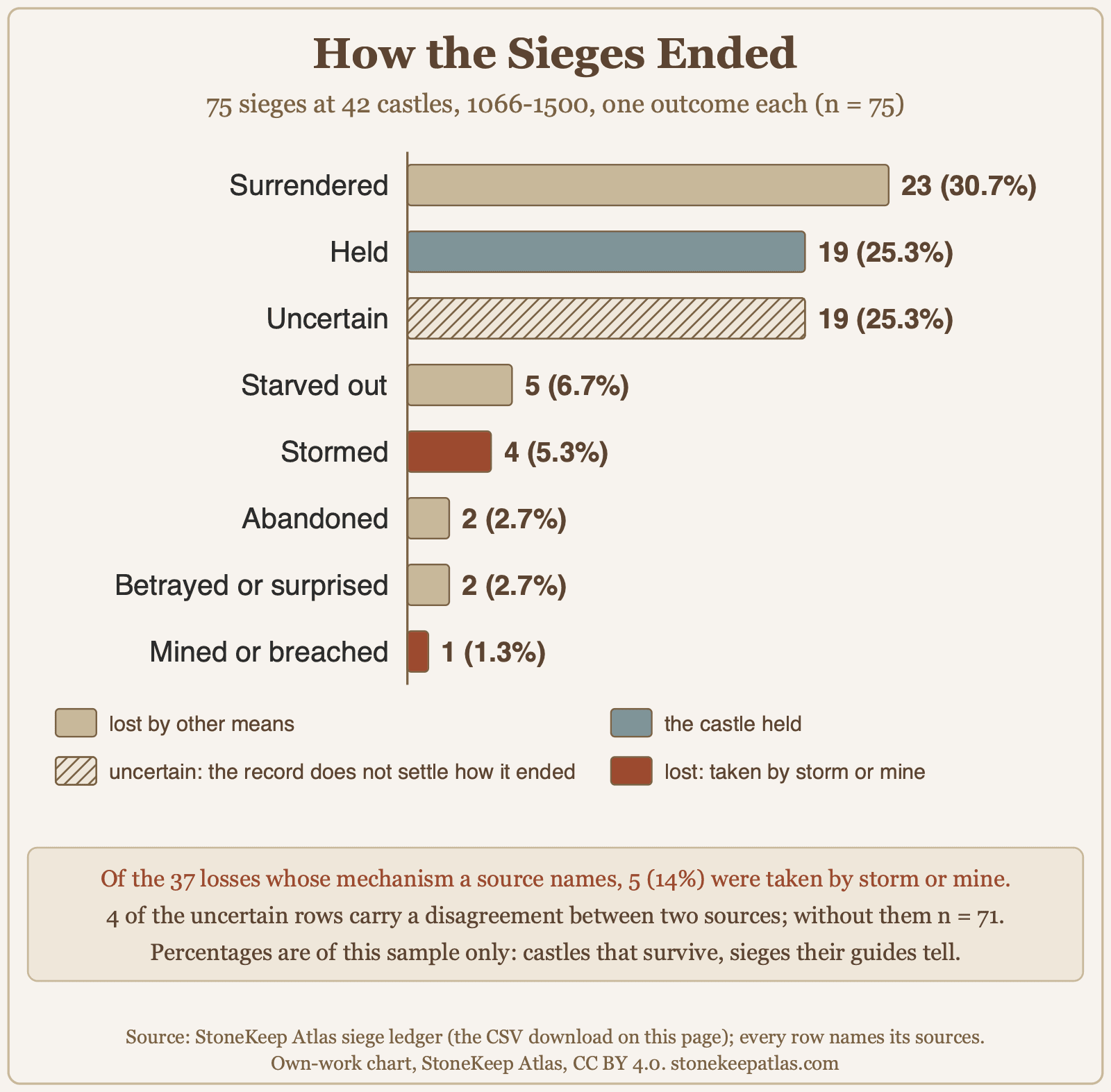
Two limits travel with that result. In the full count uncertain ties with held for second place: for 19 sieges the record says that a castle was attacked or changed hands, and not how. Seven of those are bare changes of hands, a castle simply recorded as taken or retaken. The second limit is starvation, which looms large in the story of sieges and is thin in the rows. Only 5 carry hunger or thirst as the main cause a source names, and 2 more carry it as a contributing one. The commonest ending we can actually see is a plain surrender, 23 rows, and the terms are recorded for most of them: 11 on terms, 3 at the victor’s will, 9 with nothing recorded.
In 10 of the 75, the winner went on to raze or slight what it had won. A further 14 handovers took place with no siege at all, by treaty, custody, purchase or submission. They sit on their own list and in no percentage, and in 4 of the 14 an army was present when the castle was handed over.
The sample has a shape of its own, too. Castles that survive are not a fair sample of those that were built: Higham and Barker note that up to the thirteenth century perhaps a majority were timber, and that the better-preserved stone sites dominate the literature. A ledger built from travel guides inherits that bias, and adds its own: it can only count the sieges that the guides tell. For one castle the size of that gap can be measured: David Caldwell records sixteen occasions on which Edinburgh Castle was under siege between 1093 and 1544, a number he calls “almost certainly an underestimate because our records for much of the medieval period are so poor”, and this ledger has one Edinburgh row. We would expect a guide-based ledger to favor the long, famous sieges, and one built from chronicles to catch more of the short, sudden captures that never made a castle’s reputation. That expectation is our inference, not a finding.
How long the sieges lasted
A length is the hardest thing in the ledger to pin down. Only 25 of the 75 counted sieges carry one we can use: a duration in a source’s own words, or a start and an end that a source dates. We never compute a length from dates and print it as a fact. Instead each source’s own phrase, or its dated start and end, goes into one of four bands, and each assignment is published with the data.
| How long, in the sources’ words | Sieges |
|---|---|
| Up to about a month | 8 |
| One to six months | 9 |
| Six to twelve months | 5 |
| More than a year | 3 |
The middle of the 25 falls in the band of one to six months. Seven rows that do state a length are kept out, each with its reason in the data: among them “a short siege” that no band can honestly hold (Dover in 1265), a “more than two years” that covers two castles jointly (Harlech in 1404), and five days that measure a bombardment rather than the siege (Haut-Koenigsbourg in 1462). Counting those seven, 50 of the 75 have no usable length.
Held Out, and Why
Nineteen of the 75 sieges ended with the castle still in its holder’s hands. Edmund King, writing about Rochester and the royal castles of England, put the general case in one sentence: “No castle was impregnable and rapid relief was usually needed to avert negotiated surrender or outright capture.” His “usually” is a historian’s judgment rather than a count, and the held rows are a fair place to test it. Relief is there, though not everywhere: three held rows record a relieving force, one a supply line by sea, and one a defeat elsewhere that called the besieger away.
The supply line by sea belongs to Harlech. During Madog ap Llywelyn’s revolt of 1294-95 the castle was cut off by land. J. E. Morris, working from the Exchequer accounts, wrote that “Robert de Staundon had been quite cut off from England except by sea,” and that ships were discharging cargo at Harlech on 31 March and again on 6 April 1295. Taylor’s Cadw guidebook draws the conclusion: the coastal position of Harlech and Criccieth “enabled them to be supplied and victualled from Ireland by sea, and both held out.” The sources describe a castle isolated and kept alive, not a siege pressed home.
At Carcassonne in 1240, Raymond Trencavel, son of the last viscount, tried to take the Cité back from the king’s seneschal, his chief officer in the region. His men dug toward the walls, and the defenders, in the account of the chronicler Guillaume de Puylaurens, came to meet them under the earth and drove them back “par les coups, la fumée et la chaux vive”, with blows, smoke and quicklime. It is the only siege in the ledger where a source says the defenders countermined. Puylaurens ends the episode plainly: “Quand on eut combattu ainsi pendant presque un mois, un secours fut envoyé de France, que les ennemis n’osèrent pas attendre.” (When the fighting had gone on like this for almost a month, help was sent from France, and the enemy did not dare to wait for it.)
Two more held rows turn on a relieving force. Llywelyn Bren’s rising of January 1316 destroyed the town of Caerphilly and its mills, “though the castle itself was not taken,” in Renn’s words for Cadw, and “Caerphilly Castle was relieved and garrisoned anew.” In December 1401, during the rising of Owain Glyndŵr, proclaimed prince of Wales in 1400, an attack on Harlech was “only averted by the prompt despatch of 100 men-at-arms and 400 archers, from Chester, to its relief”, as Wylie found in the records.
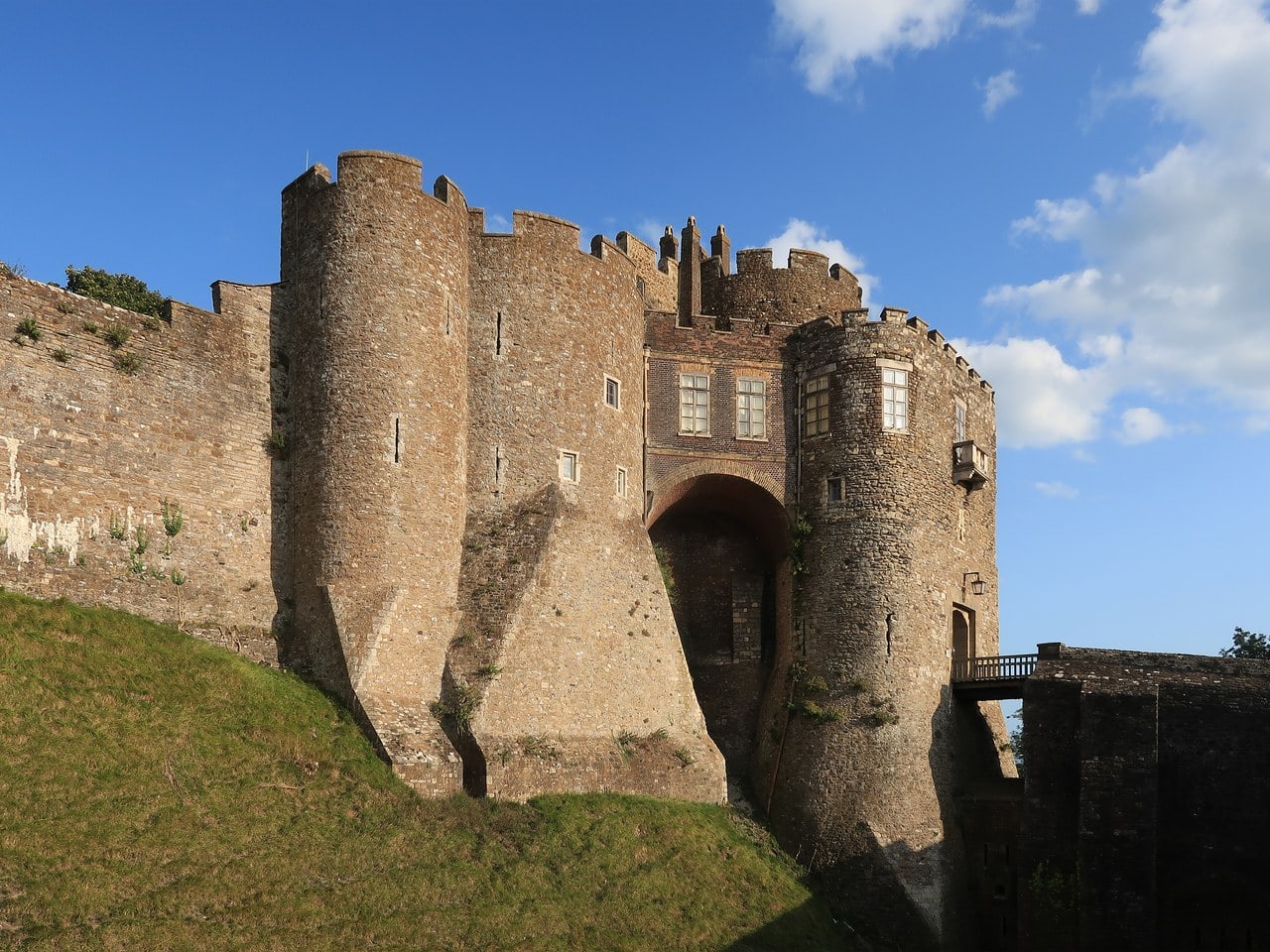
Dover Castle supplies the other two kinds of held row. In 1216 Louis of France began the siege in earnest “probably on 22 July 1216”, by English Heritage’s reckoning, and set his engines and miners to work on the main gate until a gate tower, the eastern one in English Heritage’s account, came down. The assault that climbed the rubble was thrown back through the breach, and the garrison under Hubert de Burgh held out until a truce on 14 October. The mine worked; the castle held anyway. When Louis returned on 12 May 1217, English Heritage writes, he was only about ten days into the second siege when news came that his main army had been beaten at Lincoln, and he broke it off.
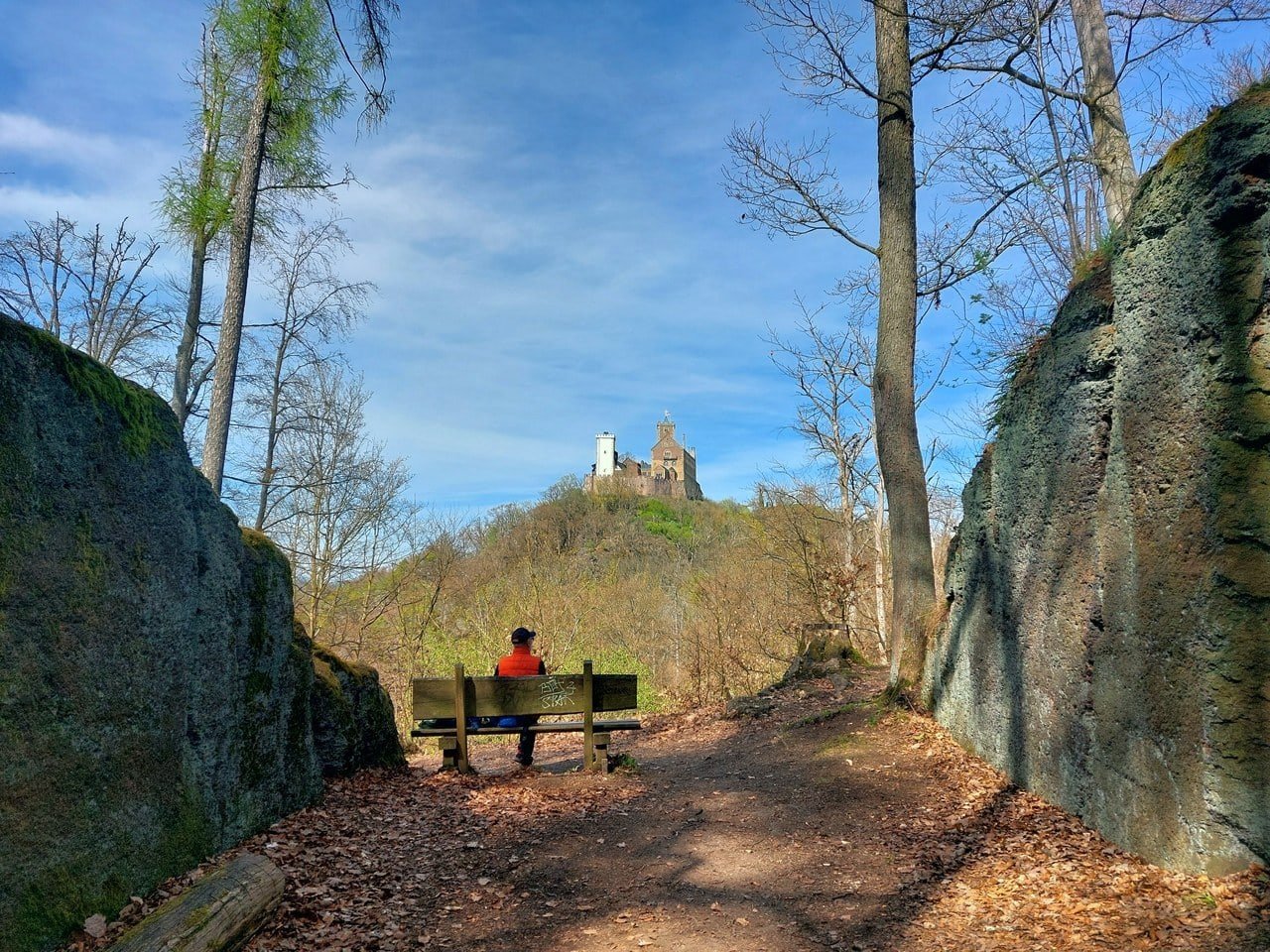
The others held for reasons the record states differently, or does not state at all. At Windsor in 1216 the barons brought siege engines close and attacked fiercely, and the Victoria County History is careful about the length: “The siege seems to have lasted from June to September, when it was raised …” The Wartburg was besieged from 1306 to 1308 by royal troops, men of Eisenach and a league of Thuringian towns, “letztlich erfolglos”, ultimately without success, in the Wartburg-Stiftung’s own account. At the Palais des Papes nobody broke in at all: Benedict XIII had been shut inside, Noël Valois wrote, “depuis quatre ans et demi”, for four and a half years, when he escaped on 11 March 1403, leaving the palace garrisoned behind him. The operator’s own page says he resisted two sieges; the ledger codes the whole blockade as one row.
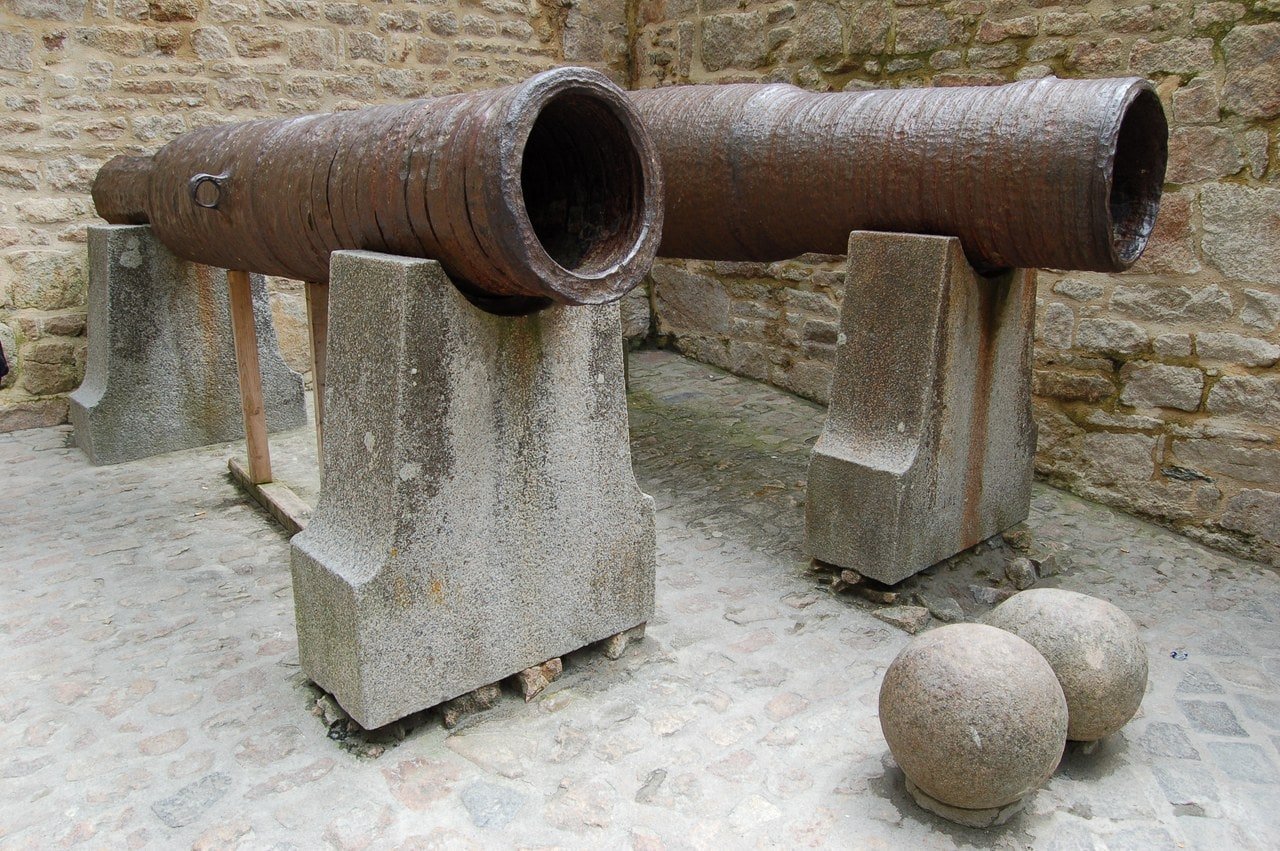
At Mont-Saint-Michel, an English blockade that Luce dates from September 1424 ended with an assault on 17 June 1434, which the garrison under Louis d’Estouteville threw back. Its commander, Thomas, Lord Scales, was “blessé, mais non tué”, wounded but not killed, Luce noted. Two wrought-iron bombards called the Michelettes still stand at the Avancée, the village’s first gate. Édouard Corroyer, who set them on their plinth, identified them in 1877 as English guns left behind after the fighting; that identification is his, and the archive records only their name.
Caernarfon “successfully withstood sieges by Owain Glyn Dwr and his French allies in 1403 and 1404,” as Taylor wrote for Cadw, without saying how either ended. Four held rows are attacks rather than sieges; two record damage done without taking the castle, at Sterrenberg in 1249 and at the burgrave’s castle in Nuremberg in 1420, which was also one of the attacks; and two are failed attempts on Puilaurens, in 1473 and 1495. King’s rule of thumb survives the test in part: relief or supply decided some held rows, and for the rest the record names a truce, a besieger who gave up, a holder who escaped, or nothing at all.
Starved, Bargained, Betrayed
Most of the losses in the ledger ended with a conversation, and its rules were old. For England and Normandy between 1066 and 1217, Strickland describes the convention of conditional respite: a garrison could ask for a fixed number of days to seek relief, promising to surrender if none came, and would then usually keep life and limb and sometimes leave with horses and arms. A castle taken by storm was at the besieger’s mercy, and kings sometimes executed garrisons, especially of rebels, though Strickland stresses how rarely the right was enforced in wars between princes. A commander who could wait had reason to offer terms, and a garrison with no relief in sight had reason to take them.
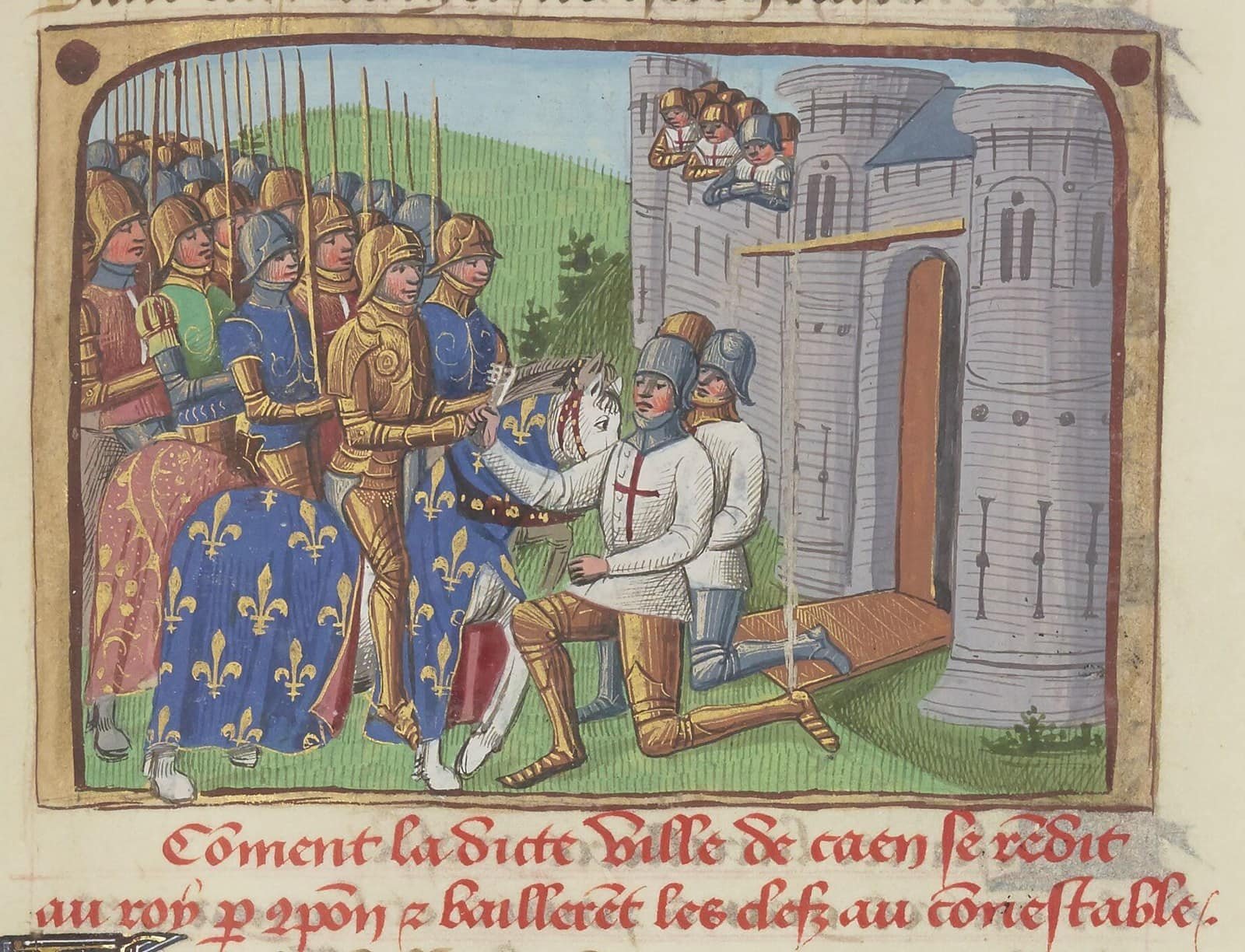
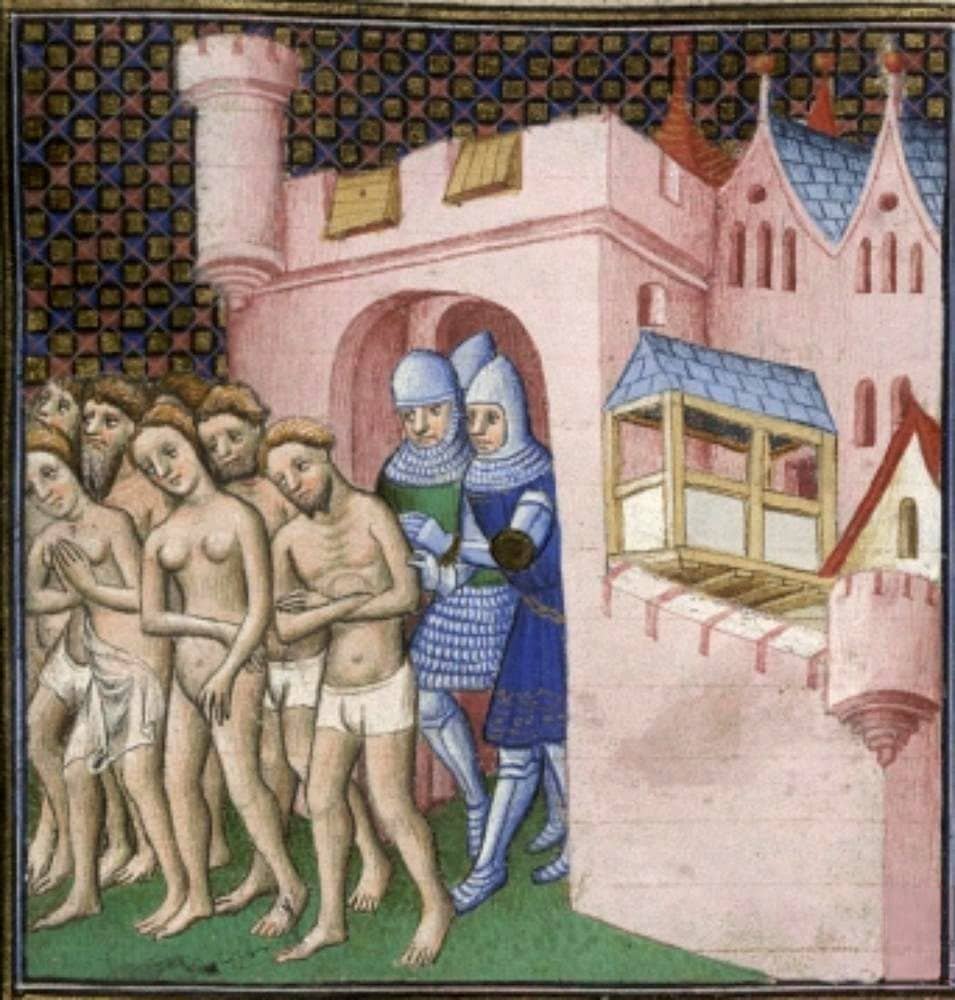
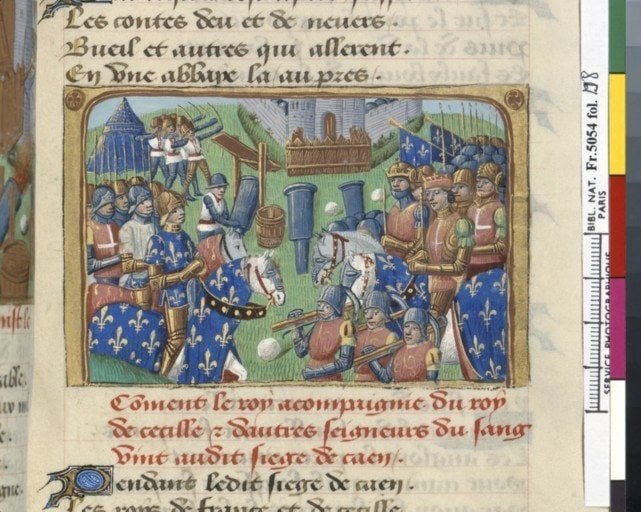
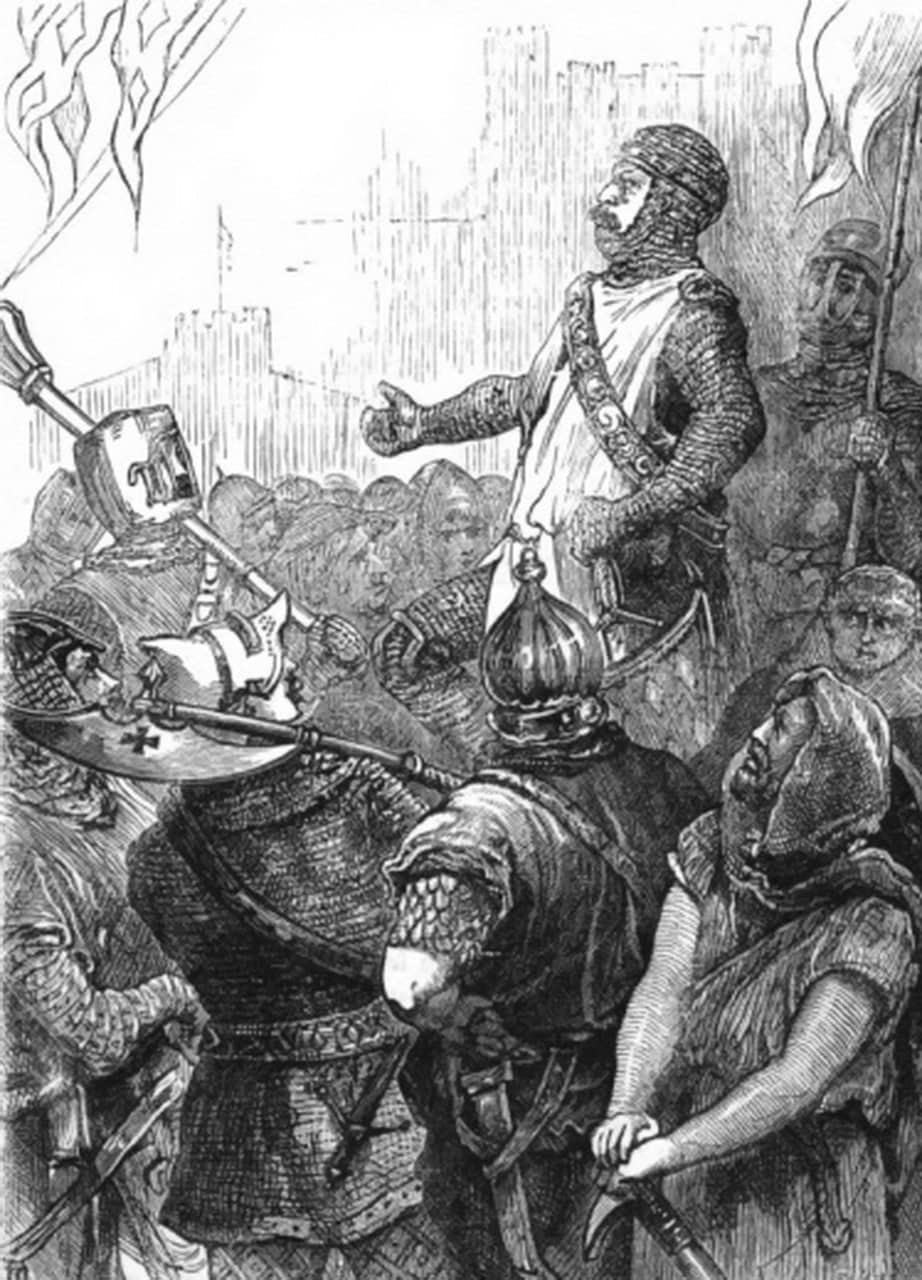
Stirling Castle shows the convention in its purest form. Edward Bruce besieged it in June 1313 and, in Historic Environment Scotland’s words, “came to an agreement with the governor of the Castle, Philip de Mowbray, by which Mowbray would surrender the castle if not relieved before 24 June 1314.” The relief came and was beaten at Bannockburn, the castle was handed over, and Robert I then destroyed part of it so that it could not be used against him. A century later Henry V’s men met the same bargain at Falaise: on 1 February 1418 the garrison agreed to surrender if not relieved within fifteen days, and on 16 February, Wylie and Waugh record, the English were admitted to the castle. In 1450 the same bargain ran the other way at Caen: with its town walls mined and breached, the English garrison agreed on 25 June to give up the town, the castle and its keep by 1 July unless by then they had given battle to Charles VII’s army, and on that day, Jean Chartier records, the bailli of Caen brought the keys out by way of the keep. The miniature at the head of this page shows that surrender. Chartier thought the castle and keep could have held out a long while yet, had the English had the courage, though in the end they would have had to yield.
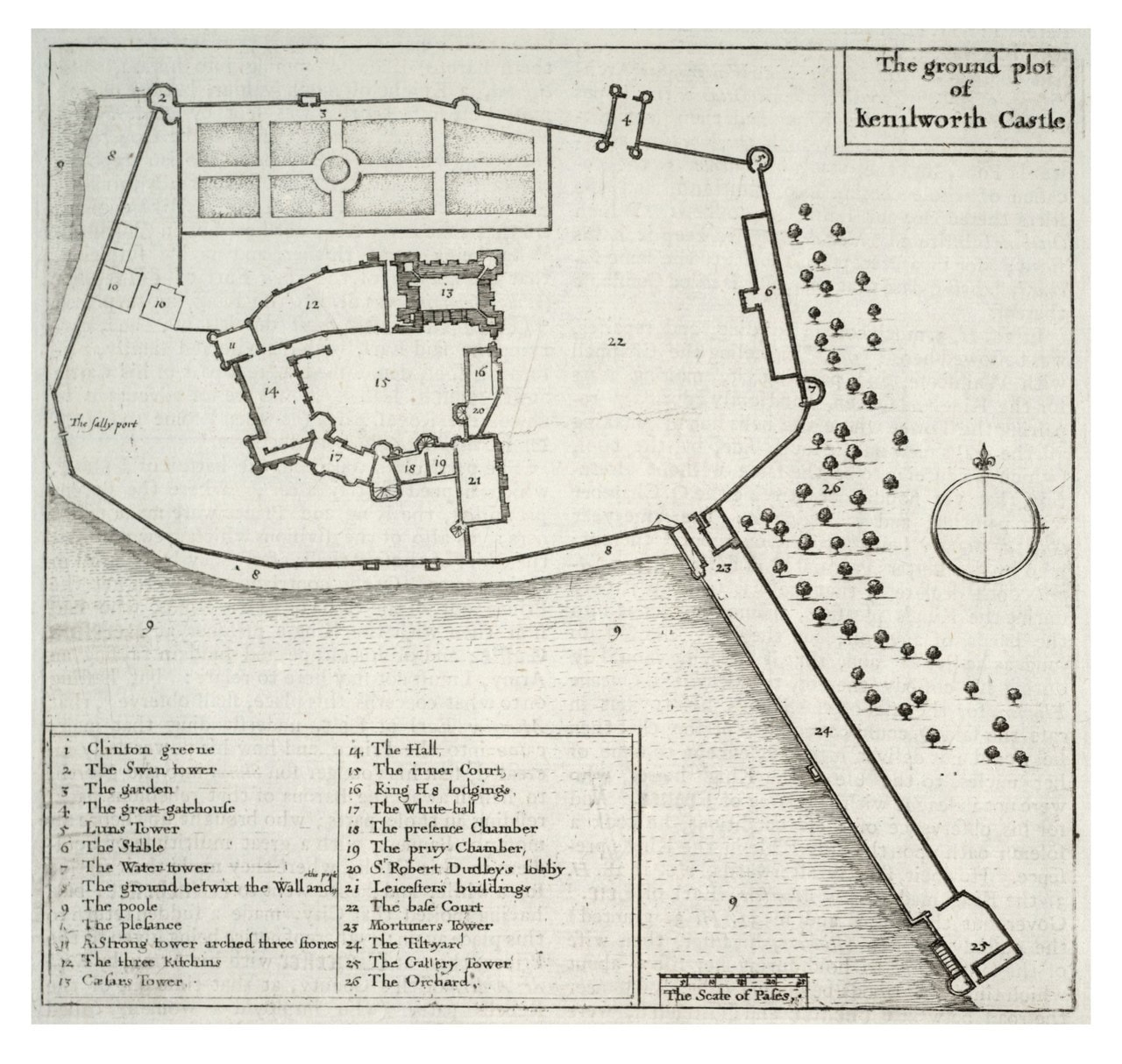
Hunger is the main cause a source names in only 5 rows, and Kenilworth in 1266 is the only one with two sources behind it. Its garrison, supporters of the late Simon de Montfort, was under attack from 25 June to 13 December 1266, “for a total of 172 days”, by English Heritage’s count. The great mere, the artificial lake around it, did what walls could not: “The water defences were preventing the royal forces from undermining the castle walls, so the king had barges hauled overland from Chester for a waterborne assault across the mere.” What ended it was the larder. “But in the end, as Henry ordered further forces to prepare to storm the castle, disease and starvation brought about what the siege had failed to,” English Heritage continues, and the garrison submitted in mid-December to the terms offered in October, leaving with their arms and horses. The Victoria County History agrees on the cause: Kenilworth held out “until famine compelled the garrison to surrender in December 1266 …”
The other starved rows rest on one source each for the cause. At Hohenzollern the Swabian league of cities and Württemberg, the castle’s operator writes, chose siege and starvation because of the steep slope, and an 1896 survey of the region’s monuments records the castle handed over on 15 May 1423 “nach ungemein zäher Verteidigung”, after an uncommonly stubborn defense; the besiegers then razed it. At the Tower of London in 1191, the King’s brother John attacked the stronghold held by Richard I’s chief minister, William Longchamp, Bishop of Ely, and Historic Royal Palaces’ own management plan records the result: “The defences held, but Longchamp was forced to surrender for lack of supplies.” At Carcassonne in 1209, the Song of the Albigensian Crusade puts the end down to water, cut off from the Aude and gone from the wells “par la grande chaleur et par le fort été”, through the great heat and the hot summer. The terms, in Duvernoy’s translation of Guillaume de Puylaurens, were “que les citoyens quittent la ville en chemise et en braies”, that the townspeople leave the town in their shirts and breeches.
Plenty of surrenders had nothing to do with hunger. Montségur, besieged from May 1243, was well provisioned, in the judgment of Duvernoy, the modern translator of Guillaume de Puylaurens’s chronicle, and the operator dates its capitulation to 2 March 1244. A fifteen-day truce followed; on 16 March the Cathars who would not abjure their faith went to the pyre, and the castrum, the fortified site on the summit, was then dismantled. Three surrenders in the ledger were made at the winner’s discretion rather than on terms. In 1276, the Basel annals record, King Rudolf of Habsburg besieged the lord of Fleckenstein, who gave “se et sua”, himself and all he held, into the king’s power; the castle is the identification of later editors and of the operator, since the annals name only the lord. At Stirling in 1304, the story goes as Historic Environment Scotland tells it, the garrison offered to surrender at the sight of Edward I’s nearly finished War Wolf, and Edward would not accept until he had used it. At Harlech on 14 August 1468 the captain, Dafydd ab Ieuan ab Einion, gave the castle up, in the words of the annals attributed to William Worcester, “ad voluntatem domini de Herbert et misericordiam regis”, to Lord Herbert’s will and the king’s mercy.
Betrayal and surprise account for only 2 rows, and they are the shortest stories in the ledger. In February 1272, while Caerphilly was in the custody of two bishops, the constable of Cardiff Castle and two knights asked to check its stores. Invited inside, Renn writes, the knights left the gate open, and the constable brought in men-at-arms who threw the bishops’ men out. On Good Friday 1401 Rhys and Gwilym ap Tudur took Conwy Castle while its garrison was at prayer, the two warders “being slain by the craftiness of a certain carpenter who feigned to come to his accustomed work …”, as Adam of Usk tells it. Besieged at once, they gave Conwy back on 28 May on condition of their lives, after binding nine of their own men in their sleep and handing them over.
Two garrisons simply left. At Termes in 1210, a siege of the Albigensian Crusade that the Aude department puts at “près de quatre mois”, nearly four months, the water ran short and the defenders offered to surrender; then a downpour resupplied them and they took the offer back. In the end they broke out by night, and Pierre des Vaux-de-Cernay records that the fugitives were caught. At Haut-Koenigsbourg in 1462 an Upper Rhine coalition bombarded the robber knights’ castle for five days, and the garrison then slipped out “bei Nacht und Nebel”, by night and fog, in the account of Hoffmann’s 1902 history; the besiegers took the empty castle and partly destroyed it.
Some castles were bargained away before a siege could begin, and these sit on the ledger’s separate list. In 1204, Powicke wrote, Falaise’s mercenary captain “made no defence. The townsmen were afraid of the damage and inconveniences which a siege entailed, and after seven days the town and its noble fortress were surrendered.” At Bodiam in November 1483, a Patent Roll commission ordered men raised in Kent and Sussex to retake the castle from the rebels. No siege of Bodiam is recorded: the National Trust says the castle “appears to have surrendered with little resistance”, and Lower, in his history of Bodiam and its lords, that it was surrendered “probably without any formal siege”.
When Castles Were Taken by Force
Five rows in the counts end with the castle taken by force: four by storm, one by a mine. That is the whole of it.
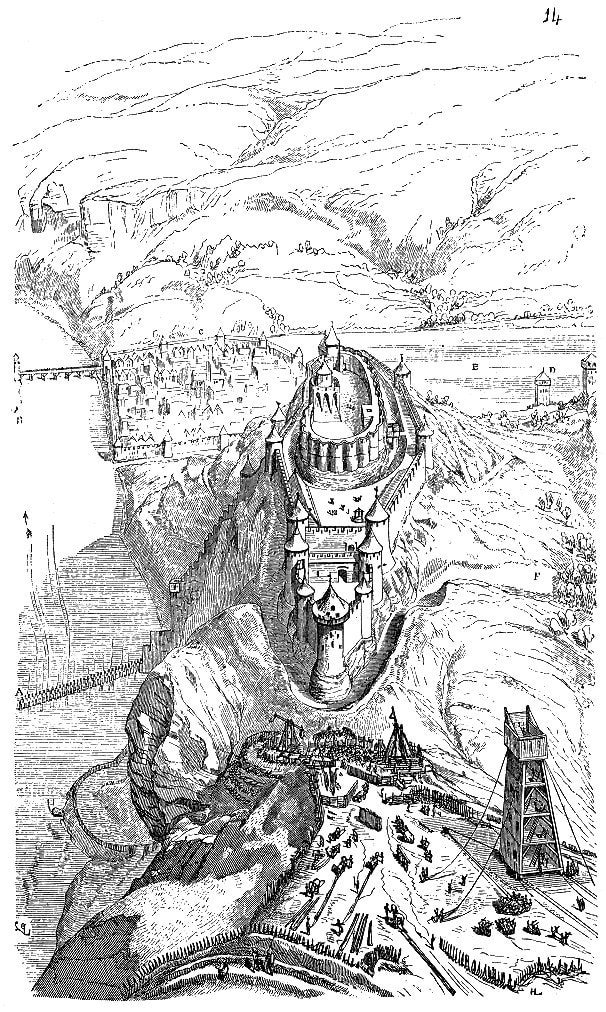
The mine was at Château Gaillard, Richard I’s castle above the Seine, which Philip Augustus besieged from the end of September or the beginning of October 1203, in Powicke’s dating, until it fell on 6 March 1204. The king’s own chronicler, Guillaume le Breton, describes two mines. At the outer enclosure the French cut into the foot of a tower, propped the hole with short timbers and set them alight, and the tower “subito corruit, et implevit fossatum”, fell at once and filled the ditch. At the innermost wall “nostri minarii murum minaverunt”, our miners mined the wall, and three stones from a petraria, a stone-throwing engine he names Chadabula, brought the undermined section down, “et patuit foramen per quod introierunt satellites nostri et milites”, and an opening appeared through which our sergeants and knights went in.
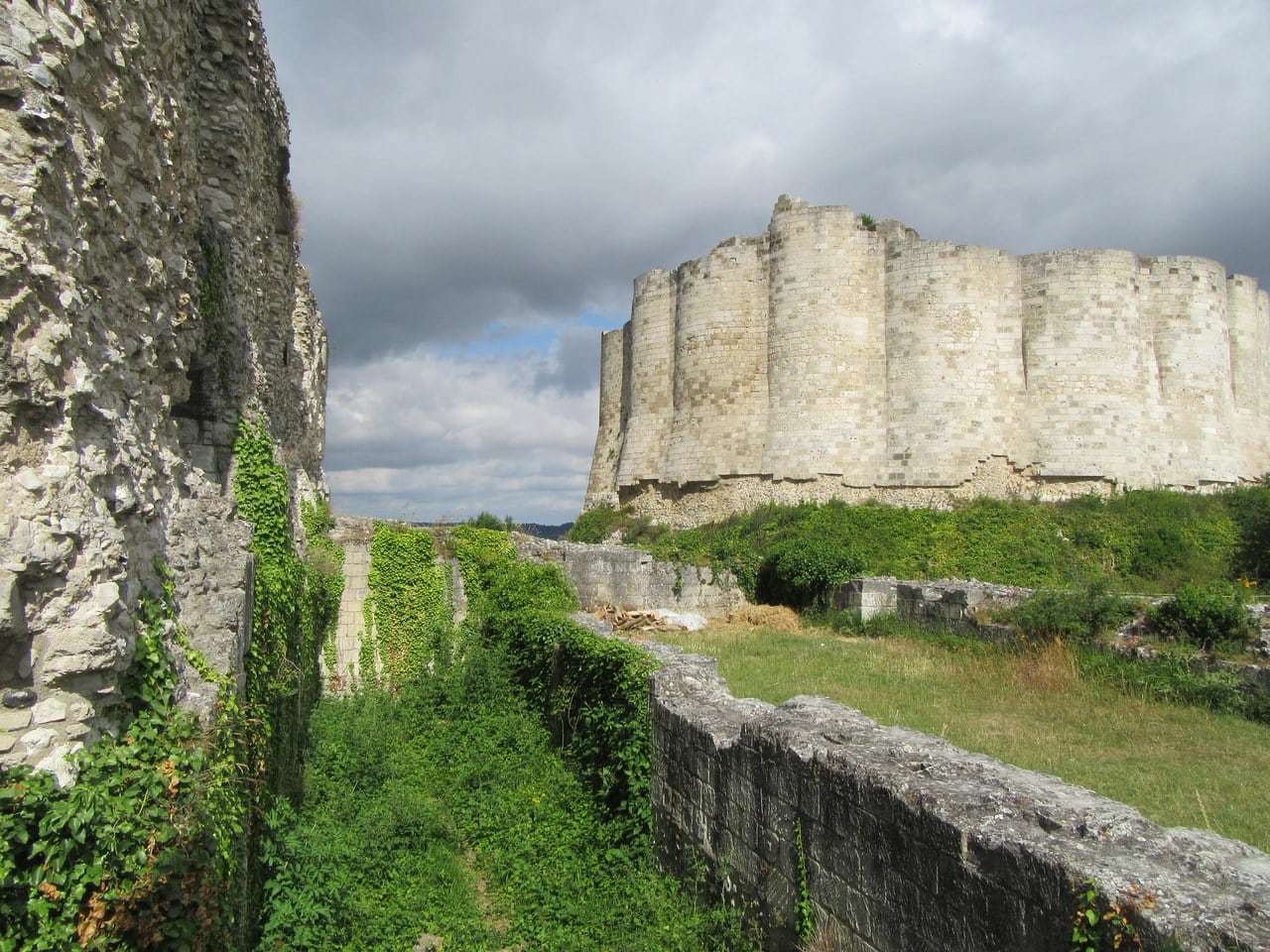
At Gaillard, hunger did its share. Roger de Lacy, the constable, had sent the castle’s non-combatants out, and the French refused the last group, over four hundred people, a passage, so that the garrison would have to feed them; they spent the winter in the hollows of the rock, Powicke wrote, “starved by cold and hunger”, and when Philip at last gave them food, nearly all of them died. Ralph of Coggeshall wrote that the garrison had held out a long time until want of food left it unable to fight on. Strickland names both causes together: “When finally want of supplies and the efforts of the French miners made further resistance impossible, the defenders sallied out and attacked the besiegers before being overwhelmed.” Coggeshall also called Gaillard “rupem illam quae videbatur esse inexpugnabilis”, the rock that seemed to be impregnable. A medieval writer, writing after the castle fell, already hedged the word. The ruin a visitor walks through today is not the siege’s damage: from 1603 the castle served as a stone quarry for two religious houses, the town of Les Andelys records, and its dismantling ended in 1611.
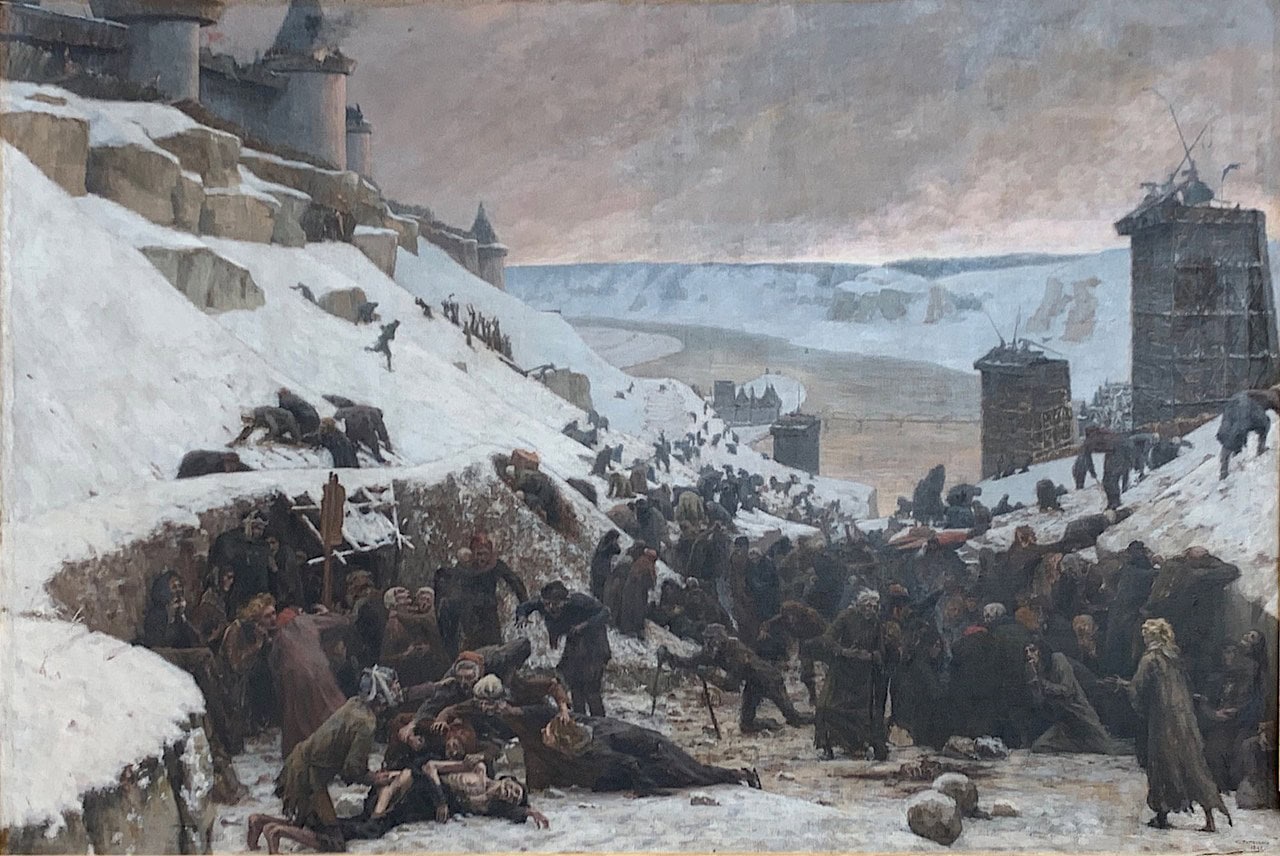
The four storms are less tidy. At Chinon, which the operator says Philip took on 23 June 1205 “après un siège de neuf mois”, after a nine-month siege, the continuator of Rigord’s chronicle has him take it by assault, “castrum potenter impugnavit et cepit”, attacked the castle in force and took it, though no source we read names a breach. At Edinburgh Castle in 1314, Thomas Randolph, Earl of Moray, was already besieging the English garrison when a small party climbed the north face of the rock in the dark; Caldwell notes that “The actual date of the assault is said to have been 14 March 1313/14” (1314 by the modern calendar). And at Leuchtenburg in 1392, the Thuringian chronicler Johann Rothe, writing within a generation, says the Wettin margraves’ men “stormeten is”, stormed it. That last rests on one chronicle verb, which we read on the printed page of the 1859 edition. A 2016 study in Burgen und Schlösser calls the episode a capture without a fight, but it cites Rothe at those same pages, and Rothe’s text has the assault, so the row is counted as a storm and printed with that caution. The fourth was a surprise rather than a battering: at Kriebstein in Saxony in 1415, Dietrich von Staupitz “überfiel und erstieg” the castle, Gurlitt recorded in 1903, falling on it and climbing in. Like Randolph’s men at Edinburgh, his party went over the wall rather than through it, which is why the ledger counts both as storms and notes the surprise.
In the ledger, more mines were dug than decided anything. Philippe Contamine wrote that “Sapping and mining were frequently practised.” English Heritage says miners “were sometimes used to dig under the foundations of a castle wall to create a horizontal ‘sap’ or mine”, hollowing a cavity at its end, shoring it with timber props, filling it with combustible material and setting it alight, “causing the wall above to collapse”. No source we read says how often a mine settled a siege, so the ledger’s single decisive mine is our count and nobody else’s. The near misses are instructive: Dover’s mine worked and the castle held, Carcassonne’s was met underground, Kenilworth’s mere kept the miners off, and at Termes, Pierre des Vaux-de-Cernay records, the sap was begun just as the garrison fled. At Falaise in 1418, in Wylie and Waugh’s words, “Mining was likewise useless, for the castle rested on the solid rock.”
Siege engines appear in several ledger sieges without deciding one on their own: engines at Windsor in 1216, the king’s stone-throwing machines that English Heritage says were erected all around Kenilworth in 1266, and, at the Wartburg in 1307, a Blide (a stone-throwing engine). In the ledger’s sources a trebuchet is named outright at two sieges: by English Heritage at Dover in 1217, which it calls “the first recorded instance of such an engine in England”, and by Historic Environment Scotland at Stirling in 1304, where the War Wolf’s missile “shattered Stirling Castle’s curtain wall” after the garrison had already offered to give up. How the walls and towers themselves were built is the subject of our guide to castle walls and battlements, and how their defenses worked against an assault, of our explainer on castle defenses.
Gunpowder arrives late in this ledger and leaves a light mark. English Heritage dates the introduction of gunpowder weapons to the mid-fourteenth century; Peter Purton notes that the first guns “were not powerful enough to harm stone walls”; and Contamine places a first turning point in the 1370s and a second at the start of the fifteenth century. In our counts, guns appear only as a second code, on two rows, and decide neither on its own. At Harlech in early 1409 the English force of Prince Henry, the future Henry V, brought great guns, one of which, called “the king’s daughter”, burst during the siege, as Taylor records. Taylor judged that Harlech “appears to have fallen in early February 1409, as much due to a lack of supplies and exhaustion as to the effect of cannon balls.” The other row is Haut-Koenigsbourg in 1462. The longer story of what finally ended the castle is told in our history of castles.
Never Taken? Four Different Claims
“Impregnable”, as historians use the word, is narrower than “never taken”. When Strickland calls a stronghold impregnable, the word describes a position that could not be stormed, not a history in which it never changed hands: he can describe “this vital and otherwise impregnable fortress” in the same sentence in which it passes out of Norman hands. So the claim splits four ways: a castle may never have been besieged, never taken by force (in this ledger, by assault), never taken at all, or never destroyed. Three castles in our catalog that carry a “never” claim show how differently they fare.
| Never besieged | Never taken by force | Never taken at all | Never destroyed | |
|---|---|---|---|---|
| Marksburg | not settled by our sources | not settled by our sources | fails: seized in 1626 | passes, in the operator’s sense |
| Eltz | fails: blockaded 1331-1333 | passes | fails: submitted in 1333 | passes for the residence, in war; outer works slighted |
| Königstein, medieval castle | fails: blockaded | passes | fails: surrendered in March 1406 | not assessed |
| Königstein, fortress from 1589 | passes, on the operator’s account | passes | passes, on the operator’s account | not assessed |
The Marksburg makes the narrowest claim of the three, and it makes it carefully. Its owners write “Die Marksburg ist die einzige nie zerstörte Höhenburg am Mittelrhein”: the only hilltop castle on the Middle Rhine never destroyed. The scope words matter, and so does the verb. The same owners’ chronicle records that in 1626 the castle was “Vorübergehend von Kurköln geraubt”, seized for a time by Electoral Cologne, without saying how; and in 1945 American shellfire from across the river caused “Zerstörungen an Bergfried, Rheinbau, Batterien und vielen Dächern”, damage to the keep, the Rhine building, the batteries and many roofs. Never destroyed, then, means never reduced to a ruin. It does not mean never taken, and it does not mean untouched.
Eltz fails the first test outright. In a feud that began in 1331, Archbishop Baldwin of Trier blockaded it, and to do so he raised, probably that same year, a castle of his own on the spur opposite. Contemporaries called that counter-castle Baldeneltz; the name Trutzeltz, Olaf Wagener and Achim Schmidt found, appears to be a later coinage, first in print in 1862. Its ruin still stands. The siege lasted two years, the regional register KuLaDig says, while the besiegers cut the castle’s supply routes. Yet Eltz was never taken by force: KuLaDig states that after a direct attack failed, the castle “wurde bis zum heutigen Tag niemals gewaltsam erobert”, has to this day never been taken by force. It fails the third test in 1333, when, in the owners’ own words, “ergaben sich die Eltzer”: the lords of Eltz submitted, and the castle became a fief of Trier, in a year the sources do not agree on. The contemporary Gesta Trevirorum, as Wagener and Schmidt read it, puts that submission down to exhaustion after long feuds rather than hunger. And it passes the fourth with a nuance the owners state themselves: “Da in der Folge die meisten Befestigungsanlagen der Burg geschleift werden mussten, blieb Eltz zwar nur noch eine ‘befestigte Wohnanlage’, gleichwohl über die Jahrhunderte unzerstört.” Most of the fortifications had to be slighted, and Eltz survived as a fortified residence that was never destroyed. Never destroyed in war, that is: the owners’ own timeline records that a fire in 1920 damaged the Kempenich houses and the roofs of Rodendorf and Platt-Eltz, and they credit luck, family policy, diplomacy and, at times, spirited help from the neighbors for the fact that no act of war touched Eltz after the feud.
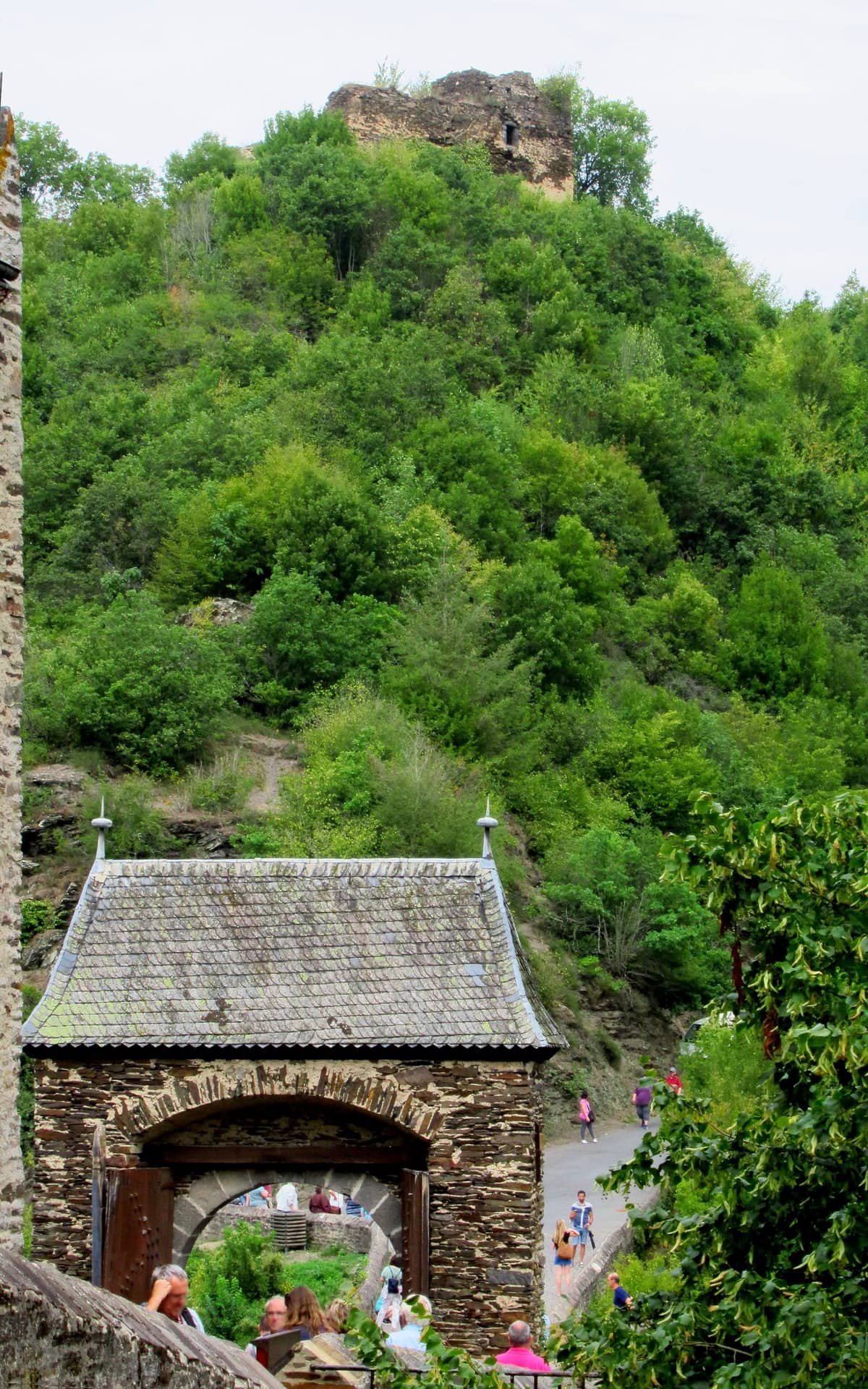
Königstein is two buildings on one rock, and the claim belongs to only one of them. The fortress begun in 1589 was, on its operator’s account, rebuilt and extended so often that no enemy dared to attack it, and the operator adds that no siege or conquest of it took place from 1639 on. Nothing here contradicts that, and the fortress’s own exhibit, “Warum ein Angriff sinnlos war” (why an attack was pointless), is about that fortress. The medieval castle that stood on the same rock is another matter. The margrave of Meissen blockaded it, a relief force from the towns of Upper Lusatia set out too late, and, as Ermisch wrote in 1902, “Mitte März zwang der Mangel an Lebensmitteln die Burg zur Übergabe”: in March 1406 lack of food forced the castle to surrender. In 1406 Königstein was taken, but not by force. The fortress’s later story is part of our account of the sieges that defined Germany.
The same split runs through the most famous claim of all. Mont-Saint-Michel’s operator, the Centre des monuments nationaux, writes in its English visit document that the Mount served “as an impregnable stronghold during the Hundred Years’ War” and that “Its ramparts and fortifications withstood all the attacks by the English, making the Mont a symbolic place of national identity.” Both statements carry a limit, one of time and one of adversary. The operator’s French history page uses “une cité imprenable” (an impregnable city) without either. When a castle is called impregnable, ask which page said it, and which of the four claims it is making.
When the Chroniclers Disagree
A ledger forces a decision on every row, and that is where the sources stop agreeing. Where two credible sources conflict about how a siege ended, we code the row uncertain and name both; where they conflict about a length enough to change its band, the length stays out of the bands. Our running list of such cases across the catalog is Where the Sources Disagree.
Numbers are the weakest link. “The figures given by medieval chroniclers are notoriously unreliable,” Brian Tierney and Sidney Painter wrote, and they gave the remedy in their next sentence: a size that can be “established from documents” is a different kind of evidence. The ledger shows both kinds side by side. The 100 men-at-arms and 400 archers sent to Harlech in 1401 come from the records; the 30 men who climbed Edinburgh’s rock in 1314 come from John Barbour’s poem, retold by Caldwell; and Renn’s Cadw guidebook gives Llywelyn Bren’s rising “an alleged force of some 10,000 men”, hedging the figure itself. At Montségur the operator counts 225 Cathars who refused to abjure, while Guillaume de Puylaurens’s thirteenth-century chronicle, in Duvernoy’s French translation, says “environ 200”, about 200. The rule cuts both ways, though. Bernard Bachrach argues that “large numbers rather than small numbers characterize medieval siege warfare”, so the safe lesson is that chroniclers’ numbers are unreliable, not that they always run high.
Lengths and dates drift too. Powicke gives Château Gaillard six months; Roger of Wendover has Philip’s army besieging it “for almost a year”. One English Heritage page gives both 13 and 14 December 1266 for the end at Kenilworth. The Centre des monuments nationaux starts the English siege of Mont-Saint-Michel in 1423, while Luce dates the effective blockade to 12 September 1424; Luce wrote that a blockade of ten months and a day had passed by 13 June 1425, an arithmetic slip: it was nine months. The Dictionary of National Biography says Conwy was recovered in 1401 “after a month’s siege”, while Adam of Usk’s dates, from Good Friday to 28 May, make the occupation about eight weeks.
Mechanisms are where a disagreement changes a code. Mesqui and Toussaint, writing in 1990, thought Gisors passed to Philip Augustus in 1193 “sans doute à la suite d’un arrangement amiable” with its captain; writing in 2011, Mesqui called Philip master of Gisors “par traîtrise”. An amicable deal and a betrayal sit in different places in this ledger, and neither version describes a siege, so the row stays uncertain. The overview in The History of the King’s Works says that in 1294 “the Welsh stormed Caernarvon”, then still half-built, while Taylor’s chapter in the same volumes says “Caernarvon was captured and sacked”; that row is uncertain too. At Carcassonne in 1209, William of Tudela and Guillaume de Puylaurens have the viscount, Raymond-Roger Trencavel, held as a hostage under the terms, while his side accused the crusaders at the Lateran Council of 1215 of seizing him under a safe-conduct; we print both or neither. At Eltz, KuLaDig says Baldwin’s men bombarded the castle with stone-throwing engines, and the castle’s owners go further and date a cannon attack to 1331; Wagener and Schmidt, who surveyed the counter-castle, find no clear written evidence for the engines.
The enfeoffment of Eltz to Trier after the feud is dated 1333 on the owners’ German page and 1336 on their English one, and KuLaDig has the counter-castle granted as a fief to Johann von Eltz in 1337. A date, like a legend, is only as old as the first record that carries it, which is the method our haunted castles piece applies to ghost stories. So the length the castle database EBIDAT gives for the failed siege of Rheinfels in 1255-56, “einer mehr als einjährigen Belagerung”, a siege of more than a year, stays out of our duration bands: we could not trace where it comes from.
You Can Visit
Few castles in this ledger still show their siege as damage. Some show the answer to it, and at Kenilworth the shot is still there. Each country’s castles are gathered in our guides to England, Wales, Scotland, France and Germany; this section keeps to what can be seen on site.
Not the castle that was besieged. At several castles in the ledger, among them these four, the castle that was besieged is not the castle that stands; at most, fragments of it survive. Montségur’s castle, its official visit guide says, was built only after the castrum was destroyed. Hohenzollern’s first castle was starved out and destroyed in 1423; today’s is the third, built from 1850 on its predecessors’ foundations. Haut-Koenigsbourg, partly destroyed after its siege of 1462 and burned in 1633, stands in what the operator calls Bodo Ebhardt’s complete restoration of 1900-1908. Termes was demolished with explosives in 1653, and only some elements of the older castle survive in its inner enclosure.
France. At Château Gaillard, the town of Les Andelys lists the advanced work and the outer bailey, both taken in 1204 before the inner bailey, as freely accessible all year. At Caen, the keep through which the keys came out in 1450 is gone: the Musée de Normandie, which runs the castle, says its destruction was ordered in 1793 and finished only early in the nineteenth century, and that excavations in the 1950s and 1960s uncovered its buried remains. Caen’s castle grounds are free to enter. At Mont-Saint-Michel, the Michelettes are on the way in, at the Avancée. Termes tells its siege in a permanent exhibition, “1210, le siège du château de Termes”, at its welcome center in the village. At Montségur, the path up passes the memorial stele to the pyre of 16 March 1244 and, higher up, wall remains the same guide dates to the castrum of 1204-1244.
Germany. On the spur opposite Burg Eltz stands the ruin of Archbishop Baldwin’s counter-castle, which the owners say “can still be seen today”. At the Wartburg, the foundation that runs it says the ground still shows the attack of 1307, in the rock cut for a Blide at the Blidenstatt, south of the castle.
Wales. At Caernarfon, which the Welsh took in the rising of 1294, the bands of darker stone in the walls stop at the North-East Tower; Cadw’s guidebook reads the break as “the change of build between work executed before … and after … 1295”. Harlech, supplied by sea in 1295 while the rising cut it off by land, now overlooks what Cadw calls “the dunes far below”, with the sea grown distant. At Caerphilly, Cadw’s replicas of four types of siege engine illustrate siege warfare in general; none is an engine from the castle’s own sieges.
Scotland. At Edinburgh, St Margaret’s Chapel, which the castle’s operator says David I built around 1130 and calls “Edinburgh’s oldest building”, was already standing when Randolph’s men climbed the rock in 1314; its doors are “open to all castle visitors”. At Urquhart, the full-sized trebuchet that Historic Environment Scotland invites visitors to marvel at is a modern reconstruction.
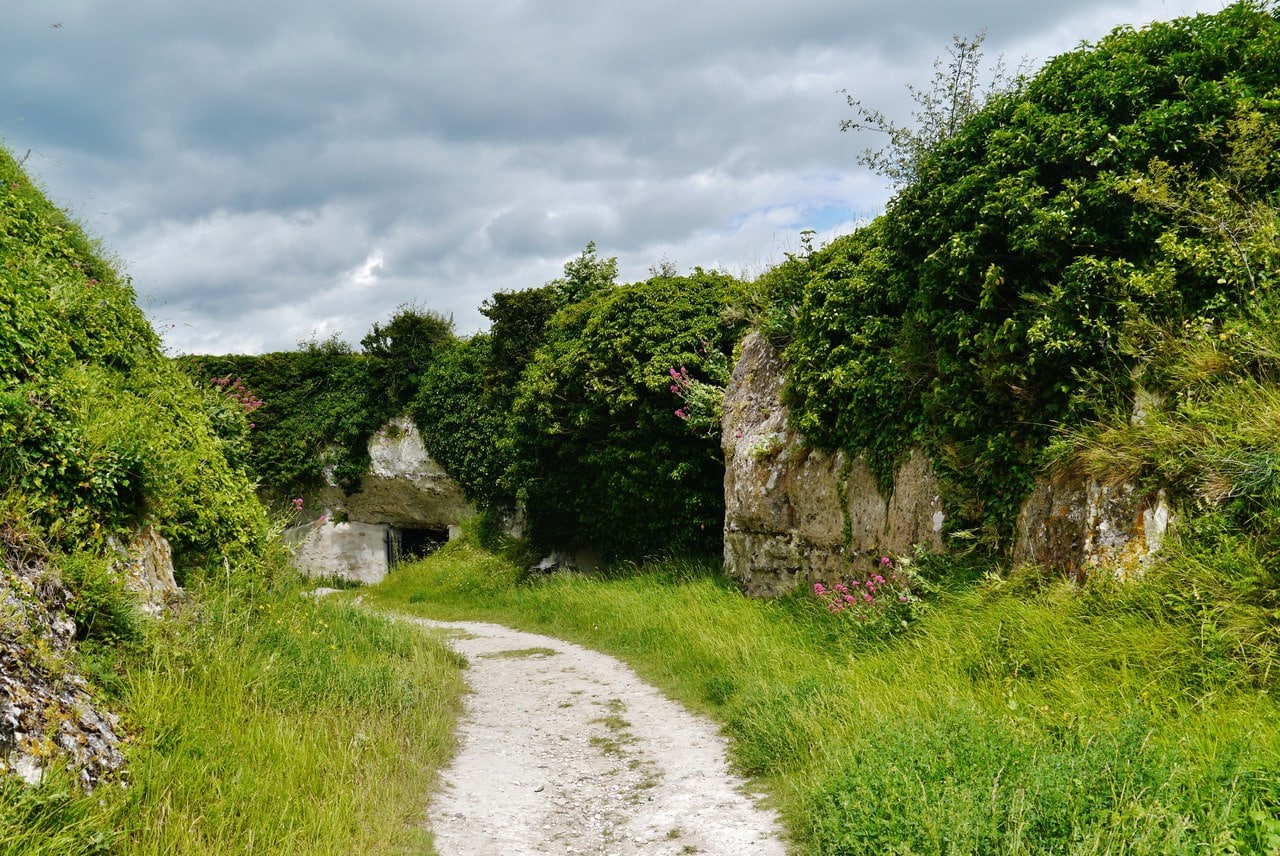
England. Dover tells its siege of 1216-17 in Dover Castle Under Siege, English Heritage’s hands-on displays. What the siege left on the ground is a response: after the war, English Heritage says, the north gate was walled up and replaced by two new gates, Constable’s Gate and Fitzwilliam Gate, while the builders cut a tunnel under the outer wall that ran on beneath the Spur. Those are the medieval tunnels visitors walk through today, dug after the siege rather than during it. At Kenilworth, a public footpath runs north-west to the earthworks of Henry V’s Pleasance, which English Heritage says was approached across the mere, long since drained. Back at the castle, the stables exhibition holds the shot that English Heritage says was hurled at Kenilworth in the siege and has stayed there ever since.
More Views of the Sieges
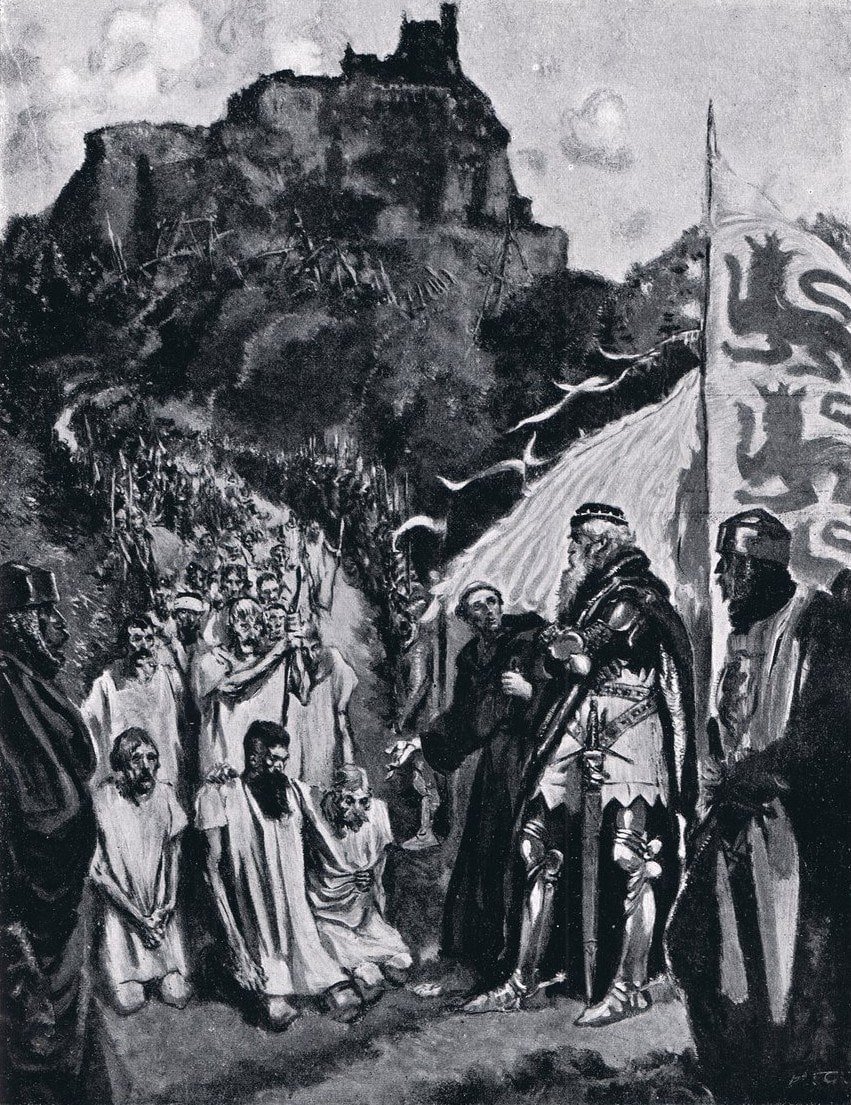
Common Questions
What was a medieval siege?
An attempt to take a fortified place by forcing its surrender or breaking in. Bradbury, as summarized by Bernard Bachrach, describes a sequence: a call to surrender, then a blockade, then one or more of the six S’s: suborning (bribing) key defenders, scaring the garrison, sapping the walls, starving the population, storming the defenses and shelling the besieged. Which defenses an attacker faced is the subject of our guide to how castle defenses worked.
How long would a medieval siege last?
No settled figure exists: the US Military Academy’s Digital History Center listed “How long did the average siege of a castle or fortified town last?” among the questions its 2018 database of sieges in the Hundred Years’ War (1337-1453) was built to answer. In our ledger the middle of the 25 sieges with a usable length falls between one and six months, and the long ones did not all end the same way: of the sieges up to about a month long, 6 were lost and 2 held; all 5 of six to twelve months were lost; of the 3 over a year, the Wartburg and the Palais des Papes held and Eltz gave in.
What are some famous medieval sieges?
Among the castles in our ledger: Dover in 1216 and 1217, which held twice against Louis of France; Kenilworth in 1266, whose garrison, English Heritage says, had only two days’ food left at the end; Château Gaillard in 1203-1204, where Guillaume le Breton gives the final assault on the baileys three weeks; Montségur, besieged from May 1243; and Harlech in 1468, where Taylor records fifty prisoners taken. Each has its row in the ledger.
Was any medieval castle never conquered?
It depends which of four claims you mean: never besieged, never taken by force, never taken at all, or never destroyed. None of the three castles we test passes all four. Even an early claim for Mont-Saint-Michel is a prayer: a fifteenth-century chronicle credits “la mercy Dieu et de monseigneur saint Michiel qui a toujours gardé et garde la place”, the mercy of God and Saint Michael, who has always guarded and guards the place. See the four claims.
Were most castles starved out or stormed?
In our ledger, mostly neither: surrender outnumbers both, at 23 of the 37 losses whose mechanism is known. That sits between two scholarly views. Rogers wrote of the twelfth century: “Blockade and attrition were the staples of siege warfare in this period as in most others. Many fortifications were stormed in onslaughts in which the number and ardour of attackers were paramount.” English Heritage, for England, calls blockade and starvation something used “generally as a last resort”.
Were castles ever taken by trickery?
Yes, though rarely by our count: only 2 rows end in betrayal or surprise, and 2 more storms began as surprises. In 1415 the Kriebstein raider kept the castle only until the margrave besieged it and took it back. Ilya Berkovich’s preliminary survey of about 700 sieges in two chronicles of Normandy and northern France found that “the most important siege methods involved the use of stratagems, surprise attacks and treachery rather than the more famous siege engines and complex engineering schemes”, while saying the results need “additional verification”.
Principal Sources
- Ashbee, Jeremy. Conwy Castle and Town Walls. Cadw, 2007.
- Bachrach, Bernard S. “Medieval Siege Warfare: A Reconnaissance.” The Journal of Military History 58, no. 1 (1994). De Re Militari.
- Berkovich, Ilya. “Unconquerable Strongholds? An Alternative View on Medieval Siege Warfare.” Abstract, Violence and Conflict Graduate Workshop, University of Cambridge, 22 January 2008.
- Burg Eltz. “Historie” and “History.” burg-eltz.de.
- Burg Hohenzollern. “Geschichte der Burg.”
- Cadw. Castles and Town Walls of King Edward in Gwynedd World Heritage Site Management Plan 2018-28. Welsh Government, 2018.
- Cadw. “Castell Harlech” and “More about Caerphilly Castle.”
- Caldwell, David H. “Edinburgh Castle Under Siege 1093-1544.” Journal of the Sydney Society for Scottish History 16 (2016) (via the Internet Archive).
- Centre des monuments nationaux. “Histoire du monument.” Abbaye du Mont-Saint-Michel.
- Centre des monuments nationaux. “Mont Saint Michel Abbey.” Visitor document, English edition, 2024.
- Chartier, Jean. Chronique de Charles VII, roi de France, ed. Auguste Vallet de Viriville, vol. II. Paris, 1858.
- Château de Termes. “Le siège du château de Termes en 1210.”
- Château du Haut-Koenigsbourg. “L’histoire du château” and “L’arrivée des Tierstein.”
- Coggeshall, Ralph of. Chronicon Anglicanum. Ed. J. Stevenson. Rolls Series 66, 1875.
- Contamine, Philippe. War in the Middle Ages. Trans. Michael Jones. Blackwell, 1984.
- Corroyer, Édouard. Description de l’abbaye du Mont Saint-Michel et de ses abords. Paris, 1877.
- Département de l’Aude / Mission Patrimoine Mondial. “Termes” and “Puilaurens.” Forteresses royales du Languedoc.
- Dictionary of National Biography. “Percy, Henry (1364-1403).” Wikisource.
- EBIDAT (Deutsche Burgenvereinigung). “Rheinfels.”
- Edinburgh Castle (Historic Environment Scotland). “St Margaret’s Chapel.”
- English Heritage. Kightly, Charles. “How Dover Castle became the Key of England – the Great Siege of 1216.”
- English Heritage. Pattison, Paul. “Medieval Siege Warfare.”
- English Heritage. “The Siege of Kenilworth Castle.”
- English Heritage. “The Sieges of Dover.”
- English Heritage. “History of Dover Castle.”
- English Heritage. “Dover Castle Things to See and Do.”
- English Heritage. “Things to See and Do at Kenilworth Castle.”
- English Heritage. “Henry V and His ‘Pleasance in the Marsh’.”
- Ermisch, Hubert. Article on the five-hundredth anniversary of Königstein’s capture. Die Grenzboten 61 (1902), third quarter.
- Festung Königstein. “Geschichte” and “Offers for tourist groups” (English).
- Forteresse royale de Chinon. “1205.”
- Fritzsche, Christian, and Benjamin Rudolph. “Die Leuchtenburg bei Seitenroda (Thüringen): zur Baugeschichte der Kernburg.” Burgen und Schlösser 2/2016.
- Guillaume le Breton. Gesta Philippi Augusti. In Oeuvres de Rigord et de Guillaume le Breton, ed. Delaborde, vol. I, 1882.
- Gurlitt, Cornelius. Beschreibende Darstellung der älteren Bau- und Kunstdenkmäler des Königreichs Sachsen, Heft 25, Amtshauptmannschaft Döbeln. 1903.
- Higham, Robert, and Philip Barker. Timber Castles. Batsford, 1992.
- Historic Environment Scotland. “Battle of Bannockburn” (Inventory of Historic Battlefields, BTL4).
- Historic Environment Scotland. Stirling Castle Statement of Significance.
- Historic Environment Scotland. “The War Wolf at Stirling Castle.” HES blog, April 2024.
- Historic Environment Scotland. “Urquhart Castle.”
- Historic Royal Palaces. Tower of London World Heritage Site Management Plan, 2016.
- Hoffmann. Die Hohkönigsburg, nebst Schlettstadt und Rappoltsweiler. 1902.
- Jaffé, Philipp, ed. “Annales Basileenses.” Monumenta Germaniae Historica, Scriptores 17. Hahn, 1861, p. 199.
- King, Edmund. Medieval England 1066-1485. Phaidon, 1988.
- KuLaDig. “Burgruine Trutzeltz.” KLD-287710.
- Lower, Mark Antony. Bodiam and Its Lords. 1871.
- Luce, Siméon, ed. Chronique du Mont-Saint-Michel, vol. I. 1879.
- Marksburg (Deutsche Burgenvereinigung). “Baudenkmal” and “Chronik.”
- Mesqui, Jean. “La tour des Archives et le fort des Tourelles de Vernon (Eure). Deux édifices royaux exceptionnels édifiés vers 1200.” Bulletin Monumental 169-4 (2011), 291-318. Persée.
- Mesqui, Jean, and Patrick Toussaint. “Le château de Gisors aux XIIe et XIIIe siècles.” Archéologie médiévale 20 (1990), 253-317. Persée.
- Meyer, Paul, trans. La Chanson de la Croisade contre les Albigeois, vol. II. 1879.
- Ministère de la Culture. “Château” (Montségur), Mérimée PA00093892. POP.
- Ministère de la Culture. “Les Michelettes, face sur l’abbaye.” Médiathèque du patrimoine, AP07R06771. POP.
- Montségur. “Guide de visite du château de Montségur.”
- Morris, J. E. The Welsh Wars of Edward I. Oxford, 1901.
- Musée de Normandie / Ville de Caen. “Le donjon” and “Accès, horaires, tarifs.”
- National Trust. “History of Bodiam Castle.”
- Palais des Papes. “9 papes à Avignon.”
- Pierre des Vaux-de-Cernay. Histoire de l’hérésie des Albigeois (Guizot trans.). Project Gutenberg 38313.
- Powicke, F. M. The Loss of Normandy. Manchester, 1913.
- Purton, Peter. “Fragile Symbols: Gunpowder and Castle Walls.” Castle Studies Trust, 2 February 2021.
- Puylaurens, Guillaume de. Chronica magistri Guillelmi de Podio Laurentii, ed. and trans. Jean Duvernoy. Paris: Éditions du CNRS.
- Renn, Derek. Caerphilly Castle. Cadw, 1989, rev. 1997.
- Rigord (continuation). Gesta Philippi Augusti. In Oeuvres de Rigord et de Guillaume le Breton, ed. Delaborde, 1882.
- Rogers, Randall. Latin Siege Warfare in the Twelfth Century. Clarendon Press, 1992.
- Rothe, Johann. Düringische Chronik, ed. Rochus von Liliencron, 1859.
- Strickland, Matthew. War and Chivalry: The Conduct and Perception of War in England and Normandy, 1066-1217. Cambridge University Press, 1996.
- Taylor, Arnold. Caernarfon Castle. Cadw, 2004.
- Taylor, Arnold. Harlech Castle. Cadw, 4th ed., 2002.
- The History of the King’s Works, vol. I. HMSO.
- Tierney, Brian, and Sidney Painter. Western Europe in the Middle Ages, 300-1475. 3rd ed. Knopf, 1978.
- US Military Academy, Digital History Center. “Medieval Sieges Project.”
- Usk, Adam of. Chronicon Adae de Usk, trans. Thompson, 1904.
- Valois, Noël. La France et le Grand Schisme d’Occident, vol. III. 1901.
- Victoria County History: Berkshire, vol. 3, “Windsor Castle.” British History Online.
- Victoria County History: Warwickshire, vol. 6, “Kenilworth.” British History Online.
- Ville des Andelys. “Château-Gaillard.”
- Viollet-le-Duc, Eugène-Emmanuel. Dictionnaire raisonné de l’architecture française du XIe au XVIe siècle. Paris.
- Wagener, Olaf, and Achim Schmidt. “… et Baldeneltz a fundamento constructum ...” Trierer Zeitschrift 73/74 (2010/2011), 215-235.
- Wartburg-Stiftung. “Die Zugbrücke der Wartburg” and “Modell einer Blide.”
- Wendover, Roger of. Flowers of History, trans. Giles, vol. II. 1849.
- Worcester, William (attributed). Annales, in Stevenson, ed., Letters and Papers Illustrative of the Wars of the English in France, vol. II pt 2. Rolls Series 22.
- Wylie, James Hamilton. History of England under Henry the Fourth, vol. I. 1884.
- Wylie, James Hamilton, and Waugh. The Reign of Henry the Fifth, vol. III. 1929.
- Zingeler. Die Bau- und Kunst-Denkmäler in den Hohenzollern’schen Landen. Stuttgart, 1896.
Image credits. Hero, the surrender of the town of Caen in 1450: Miniature: Vigiles de Charles VII, Bibliothèque nationale de France, Français 5054, public domain. Source: Vigiles du roi Charles VII 34, Wikimedia Commons; the outcomes chart, How the Sieges Ended: Diagram: StoneKeep Atlas, own work, CC BY 4.0; Constable’s Gate at Dover Castle: Photo: Michael Coppins, CC BY-SA 4.0; the Wartburg from the Blidenstatt: Photo: Thuringius, CC0; the Michelettes at Mont-Saint-Michel: Photo: Greenshed, public domain; Hollar’s ground plot of Kenilworth Castle: Engraving: Wenceslaus Hollar, public domain, via the Thomas Fisher Rare Book Library, University of Toronto; the people of Carcassonne leaving the city in 1209: Miniature: workshop of the Boucicaut Master, public domain, via the British Library; the inner curtain of Château Gaillard: Photo: Wschuyesmans, CC BY-SA 4.0; Tattegrain’s bouches inutiles at Château Gaillard: Painting: Francis Tattegrain, public domain; the Trutzeltz ruin beyond the gate of Burg Eltz: Photo: Dkvtig, CC BY-SA 4.0; the siege of Caen in 1450: Miniature: Vigiles de Charles VII, Bibliothèque nationale de France, Français 5054, public domain. Source: Vigiles de Charles VII, fol. 198, Siège de Caen (1450), Wikimedia Commons; Viollet-le-Duc’s view of the siege of Château Gaillard: Drawing: Eugène Viollet-le-Duc, public domain. Source: Siege.Chateau.Gaillard, Wikimedia Commons; De Burgh and the garrison of Dover Castle: Engraving: from Cassell’s Illustrated History of England, public domain. Source: P259-De Burgh and the Garrison of Dover Castle, Wikimedia Commons; Gillett’s surrender of Stirling in 1304: Illustration: Edward Frank Gillett, public domain. Source: Frank Gillett - The Governor with his people in front of Edward after the surrender of Stirling Castle, July AD 1304, Wikimedia Commons; a rock-cut ditch at Château Gaillard: Photo: Zairon, CC BY-SA 4.0. Source: Les Andelys Château Gaillard Burggraben 1, Wikimedia Commons. Freely licensed images are resized to fit; any other change, such as a crop, is named in the credit.